A vehicle's suspension system does more than absorb bumps in the road. It helps maintain tire contact, supports vehicle weight, reduces vibration, and contributes to predictable handling. Although coil springs and shock absorbers often receive the most attention, the components supporting the spring are equally important. One of these essential parts is the coil spring seat.
Whether you are sourcing automotive replacement parts, developing suspension components, or troubleshooting an uncomfortable ride, understanding how a coil spring seat works can help you make better decisions. From material selection and dimensional accuracy to wear prevention and maintenance, the right spring seat contributes to a more reliable suspension assembly.
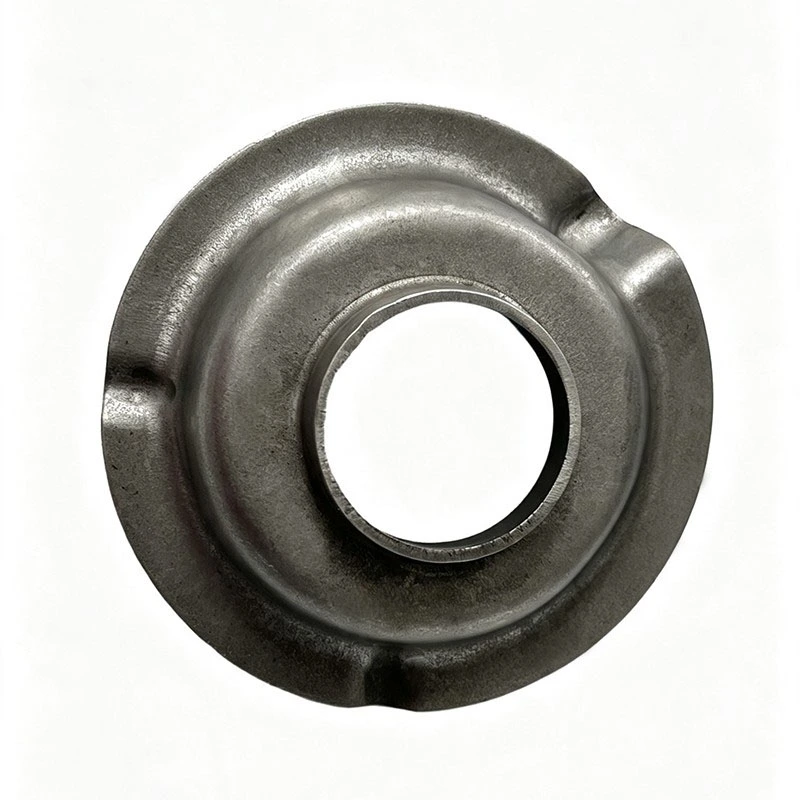
A coil spring seat is a supporting and locating component that holds a suspension coil spring in its intended position. It distributes spring loads, helps reduce unwanted noise and vibration, and maintains correct contact between the spring and surrounding suspension components. Its performance depends on material properties, design geometry, manufacturing quality, and proper installation. This guide explains its functions, common types, material options, failure symptoms, and practical selection criteria for automotive applications.
1. What Is a Coil Spring Seat?
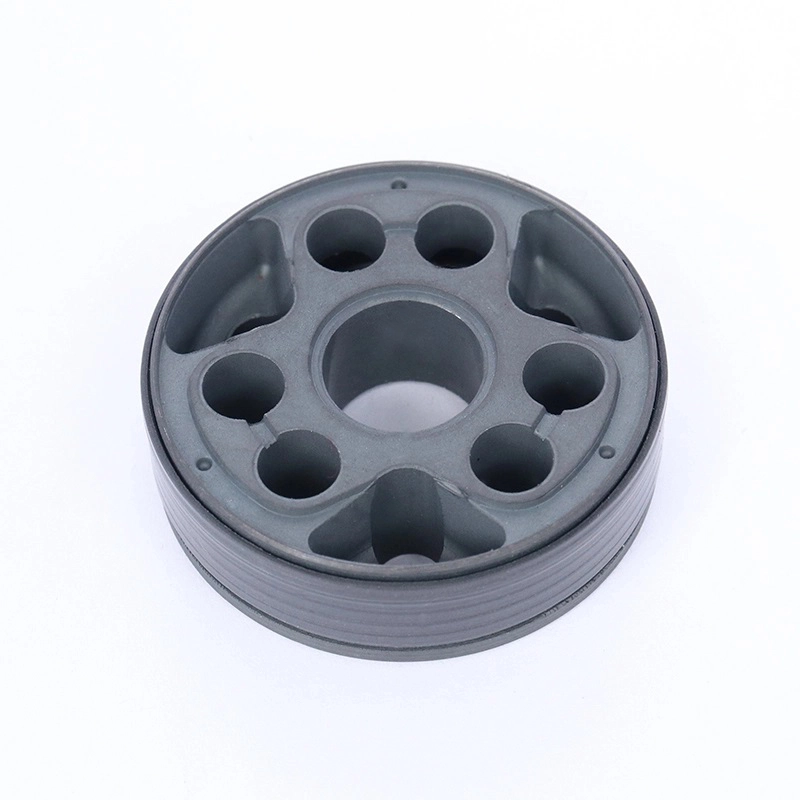
A coil spring seat is a suspension component designed to support and locate a helical spring within a vehicle's suspension assembly. Depending on the suspension design, it may be positioned at the upper or lower end of the spring, between the spring and a strut, control arm, or vehicle body structure.
The seat provides a defined contact surface for the spring end. It helps keep the spring aligned under changing loads while distributing the force transmitted through the suspension. Many designs also incorporate rubber or another resilient material to limit direct metal-to-metal contact.
Coil spring seats may be manufactured from rubber, engineered plastics, polyurethane, or metal-containing assemblies. Some designs combine an elastomer with a bonded metal insert to achieve the required combination of flexibility, structural support, and dimensional stability.
Although the terms can vary among manufacturers, a spring seat is not necessarily the same as a spring isolator or a spring spacer. A seat primarily supports and locates the spring; an isolator focuses on reducing vibration and noise; and a spacer is intended to introduce additional separation or alter installed spring height.
2. How Does a Coil Spring Seat Work?
When a vehicle passes over a pothole, speed bump, or uneven road surface, the suspension spring compresses and expands in response to changing loads. The spring stores and releases mechanical energy, while the shock absorber or strut controls oscillation.
The coil spring seat provides the contact interface through which spring force is transferred to the surrounding suspension structure. It also helps maintain the intended position of the spring end as the suspension moves through its operating range.
During normal operation, the seat performs several connected tasks:
- Supports the spring: It carries the load transmitted through the spring into the suspension assembly.
- Maintains alignment: Its locating features help prevent unwanted spring movement or rotation.
- Distributes contact pressure: Its geometry provides a suitable supporting surface for the spring end.
- Reduces vibration transmission: Resilient materials can help isolate certain noises and vibrations.
The seat must also accommodate the suspension's designed movement without excessive deformation, interference, or loss of contact. Incorrect dimensions or unsuitable material stiffness can affect the spring's position and the way loads pass through the assembly.
For this reason, spring seat design should be considered together with the coil spring, strut or damper, mounting structure, and other associated components rather than as an isolated part.
3. What Are the Main Functions of a Coil Spring Seat?
3.1 Supporting and Distributing Spring Loads
The spring seat transfers force from the coil spring to its mounting structure. A properly designed contact surface helps distribute this force across the intended area and reduces the risk of concentrated loading caused by poor fit or incorrect spring positioning.
Material strength, seat thickness, contact geometry, and long-term deformation resistance all influence how reliably the component performs under repeated loading.
3.2 Maintaining Spring Position
Suspension movement subjects the spring to changing forces and geometrical conditions. A correctly shaped seat accommodates the spring end and helps keep it in the intended location. This is particularly important for springs with specially formed end coils or designated seating positions.
If the seat becomes worn, distorted, or incorrectly installed, the spring may shift or contact adjacent components in ways the original design did not intend.
3.3 Improving Ride Comfort and Reducing Noise
Contact between metal components can transmit impact sounds and vibration into the vehicle body. Where an elastomeric seat or isolator is used, its compliance helps reduce some of this transmission.
However, noise reduction depends on the entire suspension assembly. A worn seat may cause noise, but damaged mounts, loose fasteners, deteriorated bushings, or other suspension problems can produce similar symptoms.
3.4 Supporting Consistent Suspension Geometry
The seat's height and locating features influence the spring's installed position. A dimensionally accurate part helps maintain the intended assembly geometry and minimizes unwanted changes caused by an incorrect replacement.
It is important to distinguish this role from changing the vehicle's ride height intentionally. A standard replacement seat should match the specified design rather than introduce an unapproved height adjustment.
4. What Are the Different Types of Coil Spring Seats?
Coil spring seats vary according to their position, construction, material, and intended operating conditions. Understanding these differences helps buyers identify the correct replacement and helps engineers define suitable specifications.
| Type | Main Characteristics | Typical Application |
|---|---|---|
| Upper spring seat | Supports and locates the upper end of the coil spring | Upper suspension mounting assemblies |
| Lower spring seat | Supports the lower spring end and transfers load to the mounting structure | Strut bodies and suspension arms |
| Rubber spring seat | Provides compliance and helps reduce noise transmission | Comfort-oriented road vehicles |
| Spring isolator | Creates a cushioning interface between contacting components | Suspension assemblies requiring additional isolation |
| Metal-reinforced seat | Combines an elastomeric element with a metal support or insert | Applications requiring controlled positioning and structural support |
| Plastic spring seat | Offers dimensional stability and a defined locating surface | Designs specifying an engineered plastic contact component |
These categories can overlap. For example, a lower spring seat may include a bonded rubber element and a metal support. The correct description therefore depends on the actual assembly, not simply the product name used in a catalog.
Before ordering, verify the vehicle application, original part number, installation position, mounting configuration, and any material or dimensional requirements specified by the manufacturer.
5. How Does Material Selection Affect Performance?
Material selection influences a spring seat's stiffness, load-bearing capability, vibration isolation, wear resistance, environmental durability, and production cost. The best choice depends on the intended application and the conditions in which the component operates.
| Material | Potential Advantages | Important Considerations |
|---|---|---|
| Natural rubber (NR) | Elasticity, resilience, and effective vibration isolation | Compound formulation must suit ozone, heat, and contamination exposure |
| EPDM rubber | Good resistance to weathering, ozone, and moisture | Generally unsuitable where strong oil resistance is essential |
| Nitrile rubber (NBR) | Good resistance to many oils and petroleum-based fluids | Weathering and ozone performance depend on the formulation |
| Polyurethane (PU) | Can provide good abrasion resistance and load-bearing properties | Hardness and formulation affect comfort, noise, and temperature performance |
| Engineered plastics | Dimensional stability and controlled locating geometry | May provide less vibration isolation than resilient elastomers |
Balancing Stiffness and Comfort
A softer material may provide better isolation in a particular design, but excessive deformation can compromise positioning or allow the seat to lose its intended shape. A harder material may improve dimensional stability while transmitting more vibration.
Consequently, hardness alone is not enough to determine whether a material is suitable. Buyers should also consider load-deflection behavior, compression set, temperature range, fatigue resistance, and the manufacturer's specified test conditions.
Considering Environmental Exposure
Suspension components operate in an environment exposed to water, road salt, dust, temperature fluctuations, and potentially oils or other automotive fluids. The selected compound should be compatible with the expected exposure conditions.
Metal inserts, where used, also require appropriate corrosion protection and reliable bonding or mechanical retention. Material selection should be based on documented application requirements rather than a general assumption that one material is best for every vehicle.
6. What Are the Warning Signs of Spring Seat Failure?
A deteriorated coil spring seat can affect noise levels, spring positioning, and suspension performance. Because the seat may be hidden inside the suspension assembly, early symptoms are not always easy to identify without inspection.
| Observed Symptom | Possible Cause | Recommended Action |
|---|---|---|
| Clunking or knocking over bumps | Worn seat, spring movement, loose mounting hardware, or another suspension fault | Inspect the seat and related mounting components |
| Squeaking or rubbing sounds | Material deterioration, unwanted contact, or insufficient lubrication at another component | Locate the actual source before replacing parts |
| Visible cracking or deformation | Age, fatigue, environmental exposure, or excessive loading | Compare the component with the specified condition and dimensions |
| Uneven ride height | Spring sag, incorrect replacement parts, damaged mounting components, or seat deformation | Check both sides of the suspension and measure ride height |
| Spring displacement | Incorrect seating, damaged locating features, or incompatible dimensions | Inspect spring orientation and assembly compatibility |
Why Early Inspection Matters
Continuing to operate a vehicle with a damaged suspension component can allow secondary wear to develop. A spring that is not correctly located may contact nearby parts, while a deteriorated seat may no longer provide the support or isolation intended by the design.
Nevertheless, none of these symptoms proves that the spring seat itself has failed. A qualified technician should inspect the complete suspension system and confirm the cause before deciding which components require replacement.
7. How Can You Choose the Right Coil Spring Seat?
Choosing the right part requires more than matching its external appearance. Two seats may look similar while differing in material stiffness, locating geometry, mounting features, or load capacity.
Step 1: Confirm the Application
Identify the vehicle make, model, model year, suspension configuration, and original equipment part number where available. Confirm whether the required component belongs to the upper or lower spring mounting position.
Step 2: Verify Critical Dimensions
Review the inner and outer diameters, overall height, thickness, locating steps, hole positions, and spring-end contact profile. Where applicable, confirm the dimensions of metal inserts and mounting interfaces.
Step 3: Define Material Requirements
Specify the required material family, hardness range, operating temperature, expected load, environmental exposure, and acceptable permanent deformation. For rubber components, ask for relevant test data rather than relying on hardness alone.
Step 4: Evaluate Operating Conditions
Consider vehicle weight, road conditions, duty cycle, suspension movement, noise requirements, and exposure to water, salt, heat, and automotive fluids. These factors help determine the appropriate balance between durability, stiffness, and vibration isolation.
Step 5: Confirm Compatibility and Validation
Before placing a large order, confirm the part against an approved drawing, original sample, or verified part number. For customized products, agree on inspection criteria and sample approval procedures before mass production.
- Vehicle application and reference part number confirmed
- Critical dimensions and tolerances documented
- Material grade and hardness requirements specified
- Load, compression set, and environmental requirements reviewed
- Metal insert or bonding details confirmed where applicable
- Sample approval and incoming inspection criteria established
8. What Installation and Maintenance Practices Matter?
Even a well-manufactured spring seat can perform poorly if it is installed incorrectly or paired with incompatible components. Proper installation and routine suspension inspections help preserve the intended function of the assembly.
Before Installation
- Compare the replacement part with the original component or approved drawing.
- Inspect the coil spring, strut, mounting surfaces, and surrounding hardware for visible damage.
- Remove dirt, corrosion, and debris from the relevant contact surfaces using an appropriate method.
- Check the spring end orientation and identify any locating features.
During Installation
- Position the seat according to the vehicle manufacturer's service instructions.
- Ensure the spring end sits correctly against its designated stop or contact profile.
- Avoid twisting, cutting, or modifying the component to force an unsuitable fit.
- Use the specified tools and fastener tightening procedures.
After Installation
Inspect the completed assembly for correct positioning, clearance, and secure mounting. If unusual noises, steering changes, or abnormal ride height remain, investigate the cause rather than assuming the new seat is defective.
There is no single replacement interval suitable for every coil spring seat. Inspection frequency and replacement decisions should reflect the vehicle manufacturer's recommendations, operating conditions, component condition, and any confirmed damage.
9. What Quality Checks Should Buyers Consider?
For distributors, repair networks, and automotive component manufacturers, consistent product quality is essential. A spring seat that meets basic dimensional requirements may still underperform if its material properties or bonding quality vary between production batches.
Depending on the component design, useful quality checks include:
- Dimensional inspection: Verify critical diameters, heights, thicknesses, locating features, and mounting interfaces.
- Material verification: Confirm the specified compound or plastic grade and its relevant mechanical properties.
- Hardness testing: Check elastomer hardness against the agreed specification and test method.
- Compression and deformation testing: Evaluate load response and permanent set where required by the design.
- Visual inspection: Check for cracks, surface defects, incomplete moulding, contamination, or other visible irregularities.
- Bond integrity checks: For bonded designs, assess the metal-elastomer interface using an appropriate validated method.
- Traceability: Maintain batch identification and inspection records to support consistent supply and problem investigation.
Inspection methods and acceptance limits should be agreed upon according to the product specification, intended application, and customer requirements. Not every test is necessary for every design, and no single inspection can guarantee the performance of the complete suspension system.
Why Supplier Communication Matters
Clear technical communication reduces the risk of receiving a part that is visually similar but functionally incompatible. Providing drawings, samples, annual demand estimates, and relevant operating conditions allows a manufacturer to evaluate the requirements more accurately.
For customized spring seats, discuss tooling requirements, sample lead times, dimensional tolerances, material alternatives, production capacity, and quality documentation before finalizing the order. These details help establish realistic expectations for both product performance and delivery.
10. Frequently Asked Questions About Coil Spring Seats
1. What is the primary purpose of a coil spring seat?
Its primary purpose is to support and locate the suspension coil spring while transferring spring loads to the surrounding structure. Depending on its material and design, it can also help reduce noise and vibration.
2. Is a coil spring seat the same as a spring isolator?
Not necessarily. A spring seat supports and positions the spring, while a spring isolator primarily provides a cushioning interface to reduce vibration transmission. Some components perform both functions.
3. Can a worn coil spring seat cause suspension noise?
Yes. A deteriorated or displaced seat can allow unwanted movement or contact that produces knocking, squeaking, or rubbing sounds. However, similar noises can originate from other suspension components, so inspection is necessary.
4. Which material is best for a coil spring seat?
There is no universally best material. Rubber compounds may offer useful vibration isolation, while polyurethane and engineered plastics can provide different combinations of load capacity, wear resistance, and dimensional stability. Selection should follow the application requirements.
5. How can I determine whether a replacement spring seat fits?
Check the vehicle application, original part number, critical dimensions, spring-end profile, mounting configuration, and specified material. An approved drawing or original sample can help confirm compatibility.
6. Should coil spring seats be replaced in pairs?
Not every design requires automatic replacement in pairs. The decision depends on the vehicle manufacturer's guidance, the condition of both sides, and whether the seats are part of a coordinated suspension repair. Inspecting both sides helps identify uneven wear or deterioration.
7. Does replacing a spring seat automatically improve ride comfort?
Not in every case. Replacing a damaged seat with the correct specification can restore its intended support and isolation functions. Ride comfort also depends on the springs, dampers, tires, mounting components, and overall suspension condition.
8. What information should I provide when requesting a quotation?
Provide the part number or drawing, required dimensions, material and hardness specifications, target quantity, intended application, packaging requirements, and any testing or certification requirements. If the design is customized, include a physical sample when possible.
Conclusion: Why Does the Right Coil Spring Seat Matter?
A coil spring seat plays an important role in suspension support, spring positioning, load transfer, and vibration management. Although it is often overlooked during routine vehicle maintenance, its condition and compatibility can influence the reliability of the complete suspension assembly.
For automotive parts buyers, the most effective approach is to evaluate the application, geometry, material properties, environmental conditions, and quality requirements together. Accurate specifications and appropriate inspection procedures help reduce compatibility problems and support consistent product performance.
Whether you need a replacement component for an existing vehicle or a customized solution for a new application, selecting a suitable manufacturing partner is an important step toward dependable supply.
Looking for a Reliable Automotive Component Supplier?
Ningbo XiaYi Electromechanical Tech Co., Ltd. welcomes inquiries from automotive parts buyers, distributors, and business partners seeking suitable component solutions. Share your drawings, samples, specifications, and purchasing requirements to discuss product compatibility and potential customization options.
If you are evaluating coil spring seat requirements or exploring a new component project, contact us to discuss your application and inquiry details.