- Home
- About Us
- Products
- News
- Download
- Send Inquiry
- Contact Us

About Us
Ningbo Xiayi is a high-tech manufacturer with 20 years of experience, producing precision shock absorber parts and automated equipment for global automotive OEMs.
FAQ
How long does it take to install the equipment?
The installation time varies depending on the type of equipment. For example, the rubber coating equipment developed by our company itself only requires 1 to 3 days for installation. If all the preparatory work has been completed, the process will be even faster.
How many personnel need to be dispatched to install the equipment abroad?
Under normal circumstances, 1-2 people will suffice. The main ones are engineers, who are responsible for the installation and commissioning of the equipment.
How long does it usually take for the equipment to be shipped after the order is placed?
After all the technical requirements have been discussed, it can be shipped within approximately 2 months.
How much sales volume is required to become a distributor of ours?
There are no specific sales targets set, but you need to be familiar with our products and have a certain sales network.
Can I transfer the money to you and then you pay the other suppliers?
It can be done. For long-term cooperative customers, we get along like friends and the process is more flexible.
Can I deliver the goods from other suppliers to your factory and then load them together?
It can be done. We have had similar cases before and it can help you save on transportation costs.
How do you plan your Spring Festival vacation?
The Spring Festival holiday usually lasts for about 10 days, but our sales team is generally available 24/7 and can be reached via email or online consultation at any time.
Can your equipment be installed in hot weather?
There is absolutely no problem with that. We don't have particularly strict requirements for the installation conditions of the equipment.
Can your products be installed in cold weather?
Yes, but it is recommended that the specific working conditions be clearly stated in advance. The engineers can then conduct an assessment of the raw materials and technologies.
Do you have an office in Shanghai or Guangzhou?
Currently, no. But they are both close to our country, and the operation is very convenient.
Could you send your staff to install the equipment for us here?
Sure, we offer a one-stop service including equipment installation, commissioning and personnel training.
Can I purchase only some spare parts from you?
Yes, when you purchase the equipment, we will provide a list of consumable parts. You can stock them as needed to save time and make it convenient to replace them at any time.
Will you attend the exhibition?
Yes, we will choose some well-known auto parts exhibitions both at home and abroad from time to time, either to visit them or to participate in them.
Could you deliver your equipment to the warehouse in Guangzhou?
No problem. We can deliver the equipment to the designated location as per your requirements.
How long will it take you to provide us with the design plan?
If our communication is smooth, generally a design plan can be ready within 3 to 7 days.
What are the manufacturing standards for your equipment?
Non-standard equipment is generally a set of optimal and most operable equipment that has been continuously updated and improved based on our years of production experience.
How do you package the equipment?
We will first wrap it with plastic film, then fix the equipment inside the wooden box, and the small accessories will be placed in a separate cardboard box and fixed there. Finally, all of them will be sealed and packed in wooden boxes.
Can you design the equipment according to our dimensions?
Yes, the appearance of the equipment is generally fixed, but the molds and tooling can be customized according to your size requirements.
How many years has your company been manufacturing this type of equipment?
We started building the factory and began producing non-standard equipment from the very beginning. In the early stage, it was manual or semi-automatic equipment. Later, we continuously optimized and upgraded it, and we have nearly 20 years of R&D experience.
What certificates do you have for your equipment?
We have utility models and invention patents for the equipment.
How many employees are there in your factory?
Our factory has more than 200 employees.
How can I become your agent?
If you are familiar with the related products of shock absorber parts, then you can become our agent.
Do you have an agent in our country?
Currently, there is no agent office established.
Do you have any actual pictures of your equipment projects?
Our equipment project pictures are all genuine and valid. If you need them, we can provide them at any time.
How far is the hotel from your factory?
The nearest hotel to the factory is less than 10 kilometers away and the transportation is very convenient.
How far is your factory from the airport?
The factory is less than 30 kilometers away from the airport. It's about a 30-minute drive, so transportation is convenient.
How long does it take to travel from Guangzhou to your factory?
The journey from Guangzhou Airport to Ningbo Airport takes approximately 2.5 hours, followed by 30 minutes to our factory. The total duration is around 3 hours.
Where is your factory?
Our factory is in Jinshan Intelligent Manufacturing Park, Jiangbei District, Ningbo.
Do you offer free spare parts?
We can provide some spare parts for free to facilitate your replacements.
Which types of vehicles are your products suitable for?
Our products are applicable to any vehicle types, such as cars, passenger vehicles, heavy trucks, motorcycles, etc.
Is your product mainly exported to the aftermarket?
Our products are not only exported to the aftermarket for repair services, but also can be exported to the OEM vehicle component supply market.
Is your product mainly exported to the OEM market?
Our products can be supplied to both OEM manufacturers, first-tier component suppliers, and after-sales maintenance channels.
Does your product meet the requirements for integration with the main vehicle manufacturers?
We have a complete TS16949 system certification and are always available for on-site audits and inspections at our factory. Currently, we have established supply partnerships with multiple main vehicle manufacturers both domestically and internationally.
Do you have detailed and professional installation manuals?
Different accessories and shock absorber types have different installation methods, and relevant manuals can be provided as needed.
Can OEM accept it?
OEM can accept it. And we already have it in operation, so you can rest assured.
Do you offer samples? Are they free or charged?
We can provide samples for free if they are in stock. If there is no stock in the mold inventory, a small quantity can also be provided for free.
What is your payment term?
For new customers, payment is required before shipment. However, for long-term cooperative customers, we can negotiate the terms.
What is your minimum order quantity?
The minimum order quantity varies depending on the product. Generally, the MOQ is 500.
Are you a trading company or a manufacturer?
Our company is a manufacturer. We have a complete team of technology, quality control and sales. Welcome to visit and guide us.
How long is your delivery time?
Delivery with available stock usually takes within 2 days. Delivery with molds that need production usually takes around 10 days. Production of a new mold usually takes about 1 month.
How many production lines do you have in your factory?
We have more than 10 production lines. We can arrange shift work and the factory has extra space, so we can add more production lines at any time to increase production capacity.
How many samples can you offer for free?
The number varies depending on the type of accessories. Generally, we can offer 20 samples for free.
How should the mold fee be paid?
Before the development, half of the mold fee can be paid in advance. After the sample test is qualified, the remaining half can be paid.
Can the mold fee be refunded?
Yes, if a certain quantity is achieved within one year, the entire mold fee can be refunded. The amount varies depending on the different products, and this will be provided along with the quotation.
How many automatic injection molding machines do you have?
We have 15 automatic injection molding machines.
How many automatic blow molding machines do you have?
We have 15 automatic blow molding machines.
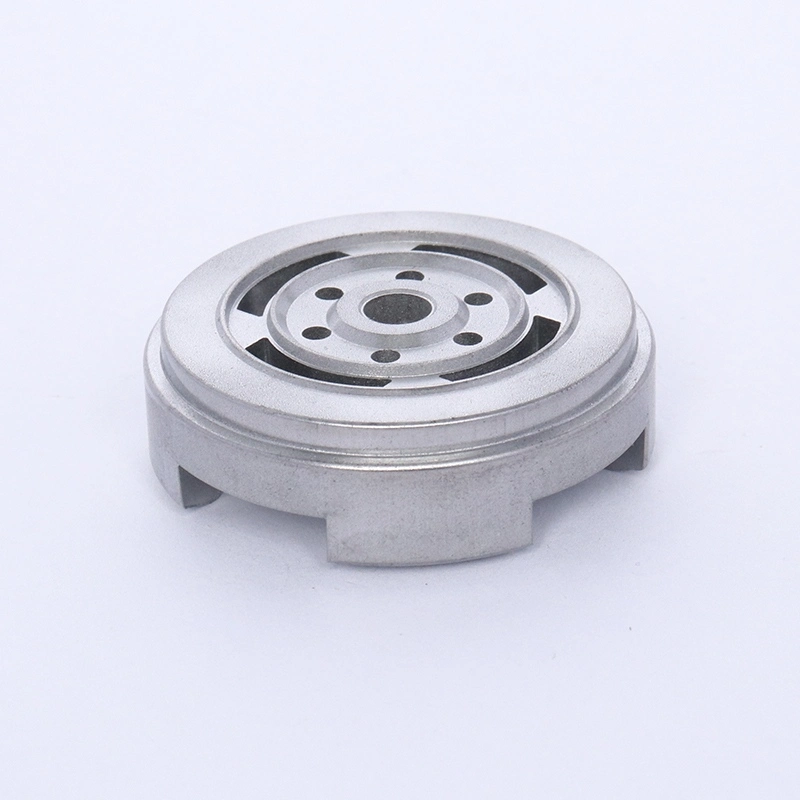
What is a shock absorber piston?
A shock absorber piston is a core internal component that controls hydraulic fluid flow inside the shock absorber to regulate damping force.
What is the function of a shock absorber piston?
The main functions include: Controlling damping force, Regulating oil flow, Improving vehicle stability.
What types of shock absorber pistons are available?
Main types: Powder metallurgy pistons, aluminum pistons, PTFE banded pistons, wide groove pistons with PTFE strip.
What is a PTFE banded piston?
A PTFE banded piston is a metal piston banded with a PTFE wear-resistant band to reduce friction and improve sealing performance.
What are the advantages of PTFE banded pistons?
Low friction, Noise reduction, High wear resistance, Long service life.
Why is PTFE used in shock absorber pistons?
PTFE offers: Extremely low friction coefficient, Excellent wear resistance, High temperature resistance, Chemical stability.
What are the working conditions of shock absorber pistons?
Typical conditions: Temperature: -40°C to 120°C, Oil environment, Reciprocating motion, High pressure.
What is the friction force range of a piston?
Typical friction force: 5–30 N
What is the service life of PTFE banded pistons?
Under normal conditions: Millions of cycles
What materials are used for shock absorber pistons?
Materials include: Iron-based powder metallurgy, aluminum material and PTFE composites.
What is a powder metallurgy piston?
A piston manufactured using powder compaction and sintering process.
How is PTFE banding applied to pistons?
Methods include: Heat pressing, Mechanical insertion, Molding process.
How to test shock absorber piston quality?
Tests include: Dimensional inspection, Friction testing, Wear resistance testing, Sealing performance testing.
How is the wear resistance of PTFE pistons?
Wear ≤ 0.03 mm under high-temperature oil conditions
How to choose the right shock absorber piston?
Consider: Size, Temperature, Friction requirements, Application.
Do you support OEM customization?
Yes, we support: Custom dimensions, Material customization, Structural design.
Why do shock absorber pistons wear out?
The reasons include: High friction, Material fatigue, Oil contamination.
What is the difference between PTFE banded pistons and standard pistons?
PTFE banded piston has less friction and noise but longer lifespan.
What are common failure modes of shock absorber pistons?
Wear and tear, Cracking, Sealing failure
Why does the piston band detach?
Band detachment is typically caused by: 1. Grooves design problem; 2. Low static retention force; 3. Thermal expansion mismatch at high temperatures.
How to prevent the phenomenon of banded piston detachment?
Ensure that the extraction force meets the requirements, and recommend that the customer design a reasonable slot depth of 0.40 - 0.45mm and a reasonable slot width of 0.80mm. At the same time, strictly control the roughness of the inner wall of the cylinder tube.
What materials are used for your banded pistons?
Our bases utilize MPIF FC-0208 standard powder metallurgy. The bands are made of reinforced PTFE filled with carbon fiber, graphite or MoS2, can also use other fillers or material according to special demands.
What is the maximum temperature that your banded piston can withstand?
This material maintains stable physical properties under extreme continuous operating conditions from -40~+150 ℃, suitable for all climates.
How does the friction test affect shock absorber performance?
Low and stable dynamic friction μ≤0.05 significantly reduces shock absorber hysteresis. We conduct friction tests on every batch of Banded Pistons to ensure minimal heat generation during high-frequency motion, preventing oil overheating and eliminating noises in the suspension system.
How is the durability of a banded piston evaluated?
Durability is primarily evaluated through 5 million cycle fatigue tests and peel strength tests. In rig tests simulating real-world conditions, the band must remain crack-free, without flaring or detachment. This ensures reliable damping performance over 100,000 kilometers of vehicle mileage.
What materials are typically used for shock absorber oil seals?
The rubber material is made of high-performance nitrile rubber, the framework is made of 40Mn high-strength steel, and the spring is made of 65Mn spring steel.
What is the hardness of nitrile rubber? What are its characteristics?
The hardness is usually set at 80 ± 5 Shore A, and it exhibits excellent oil resistance and wear resistance.
Why is 40Mn used for the frame?
To ensure the structural stability of the oil seal during high-speed reciprocating motion.
Why is 65Mn spring steel used for the spring?
It provides a persistent and constant lip axial force and compensates for the wear of the rubber.
Can your oil seals compete with well-known brands like NOK?
Yes. Our oil seals use high-quality raw materials and advanced production technology. We guarantee that our quality can match the standard of NOK, but our price is much more competitive. We provide high quality at a reasonable cost.
What are the main applications of these oil seals?
Our oil seals are widely used in automotive shock absorbers, motorcycles, and other industrial machinery. They are suitable for various vehicle models, including passenger cars, commercial vehicles, and off-road vehicles.
What is the difference between a cheap oil seal and a high-quality one?
The key differences lie in material quality, manufacturing precision, and sealing performance.
• A high-quality seal uses pure rubber with consistent hardness, ensuring long service life and no oil leakage.
• Cheap seals often use recycled materials with poor elasticity, which easy to cause oil leakage and damage the shock absorber quickly.
• A high-quality seal uses pure rubber with consistent hardness, ensuring long service life and no oil leakage.
• Cheap seals often use recycled materials with poor elasticity, which easy to cause oil leakage and damage the shock absorber quickly.
How do shock absorber oil seals perform in extreme low-temperature environments?
Professional shock absorber gaskets must have excellent resistance to low-temperature brittleness. According to the experimental report, the brittleness temperature of high-quality NBR rubber compound can be as low as -52℃, and it can still maintain sealing elasticity in an environment of -40℃, ensuring that the shock absorber does not experience initial leakage when the vehicle is traveling in extremely cold areas.
How to ensure the quality of oil seal during transportation?
We use professional industrial packaging to protect the oil seals from dust, moisture, and physical damage during shipping. We also can provide neutral packaging according to your request.
What is the core function of the shock absorber oil seal?
It seals the high-pressure hydraulic oil inside the shock absorber and, at the same time, uses the dust lip to remove dirt and moisture from the piston rod.
What is the working environment of the shock absorber oil seal?
It is subjected to high-frequency reciprocating motion, instantaneous high pressure, and continuous high temperature (approximately 100℃) due to friction.
How to ensure the quality of oil seals through production processes?
1. Sizing control: Strictly follow the vulcanization process and ensure there are no insufficient sulfuration or surface defects through visual inspection. 2. Dimension accuracy: Use a 0.001mm high-precision projector or image measuring instrument to measure the main lip diameter and outer diameter, ensuring that the tolerance is controlled within an extremely small range.
Why is fluid resistance critical for these seals?
The shock absorber is filled with hydraulic oil, and the oil seal is immersed in it for a long time. After the high-performance NBR material is subjected to standard oil immersion at 100℃ for 70 hours, the volume change rate needs to be controlled within a very small range (such as -1.2%) to prevent the rubber from excessively expanding and causing excessive friction, or excessively contracting and resulting in sealing failure.
What are the key precautions during the installation of shock absorber oil seals?
1. Lubrication: Before installation, an appropriate amount of compatible lubricating grease must be applied to the lip of the oil seal to reduce dry friction during the initial operation.
2. Alignment: Use a dedicated tooling to press the oil seal vertically into the cavity to avoid deformation of the frame.
3. Piston rod inspection: Ensure that the surface of the piston rod is free of scratches and that the roughness meets the requirements to avoid scratching the main lip.
2. Alignment: Use a dedicated tooling to press the oil seal vertically into the cavity to avoid deformation of the frame.
3. Piston rod inspection: Ensure that the surface of the piston rod is free of scratches and that the roughness meets the requirements to avoid scratching the main lip.
What is "Compression permanent deformation" and how does it affect seal life?
Compression permanent deformation measures the ability of rubber to return to its original shape after being compressed. Experimental data shows that the compression deformation rate of high-quality shock absorber gaskets under conditions of 100°C/120°C is typically less than 25% or less than 50%. The lower the deformation rate, the better the resilience and sealing pressure of the sealing lip after long-term use.
What do "Tensile Strength" represent in report data of oil seal?
The tensile strength represents the material's ability to resist tearing. It is usually required to be ≥ 10 MPa or even as high as 17 MPa.
What do "Ultimate Elongation" represent in report data of oil seal?
The elongation at breakage indicates the toughness of the material. It is usually required to be ≥ 150% to ensure that the oil seal will not crack under the severe vibrations caused by road impacts.
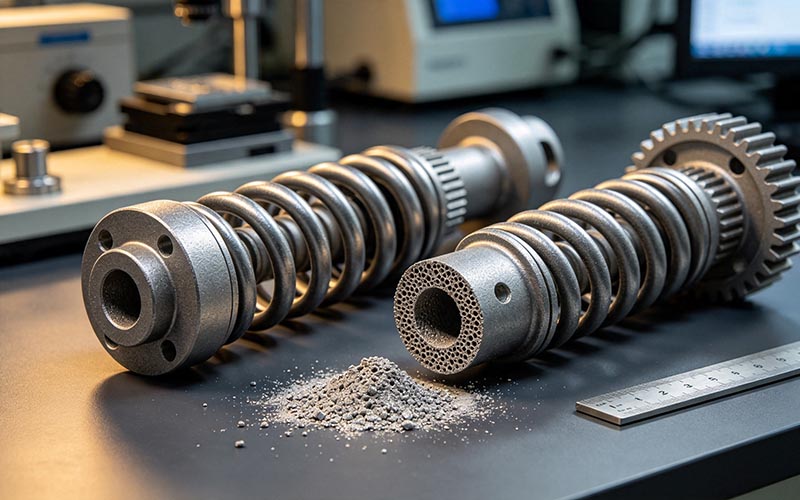
What are powder metallurgy shock absorber parts?
Powder metallurgy shock absorber parts are precision components manufactured through powder compaction and sintering processes, including pistons, base valves, and rod guides.
What are the applications of powder metallurgy in shock absorbers?
Applications include: Pistons, Base valves, Rod guides
What raw materials are used for powder metallurgy parts?
Mainly iron-based powders, copper-based powders, and other metal powders.
Why are iron-based powders used?
Advantages: Cost-effective, High strength, Good machinability
What is the manufacturing process of powder metallurgy shock absorber parts?
Process: Powder mixing → Compaction → Sintering → Sizing → Post-processing
What is the purpose of powder mixing?
To ensure uniform distribution of materials and improve consistency.
How does compaction affect product performance?
Density determines strength, and pressure affects dimensional accuracy.
What are the key factors in sintering?
Key factors: Temperature, Time, Atmosphere
What is the function of sizing?
Improves dimensional accuracy and surface finish.
How is the wear resistance of powder metallurgy parts?
Excellent wear resistance for long-term operation.
How does porosity affect performance?
Porosity: Improves lubrication, Affects strength
How to control quality of powder metallurgy parts?
Quality control through: Raw material inspection, Process control, Final inspection
What are common testing items for sintered parts?
Includes: Density, Hardness, Dimensions, Strength
What causes cracks in sintered parts?
Causes: Improper temperature, Internal stress
Can powder metallurgy parts be customized?
Yes: Material, Size, Structure
What are the advantages of powder metallurgy vs machining?
Advantages: Lower cost, High material utilization, Mass production
Why are powder metallurgy parts used in shock absorbers?
Because of the following reasons: high cost-effectiveness, high consistency, and batch production capability.
Can powder metallurgy replace machined parts?
Yes, especially in high-volume production.
What is the future of powder metallurgy in automotive parts?
Trends: Higher precision, Higher strength, Lightweight
What is a shock absorber piston rod?
A shock absorber piston rod is a critical component that connects the piston to the external structure, transmitting motion while ensuring sealing performance.
What is the function of a piston rod in a shock absorber?
It provides: Force transmission, Motion guidance, Sealing support
What materials are used for piston rods?
45# steel, 35# steel, 40Cr, SAE1045, CK45, 42CrMo4
Why use medium carbon or alloy steel as material of piston rod?
These materials offer: High strength, Good hardenability, Cost efficiency
What is the full manufacturing process of piston rods?
Typical process: Material cutting → Turning processing → Induction hardening → Fine grinding → Hard chrome plating → Polishing → Inspection
Why is induction hardening used for piston rod?
Induction hardening increases: Surface hardness, Impact resistance, Service life
What is the purpose of chrome plating for piston rod?
Chrome plating improves: Corrosion resistance, Wear resistance, Surface finish
Why is superfinishing required for piston rod?
Ensures: Sealing performance, Low friction, Longer lifespan
What is the hardness of piston rods?
Typical values: Induction layer: HRC 50–60, Chrome layer: ≥900 HV
What is the chrome plating thickness of piston rod?
Typical range: 10–50 microns
What is the surface roughness requirement for piston rod?
Ra ≤ 0.2 μm, Low roughness ensures sealing performance.
What are the working conditions of piston rods?
Conditions: High pressure, Reciprocating motion, Oil exposure, Temperature variation
How to ensure piston rod quality?
Includes: Material inspection, Hardness testing, Coating inspection, Corrosion testing
How long can the piston rod salt spray test last?
It can last for more than 48 to 96 hours, depending on the specific requirements of the customer.
Why do piston rods fail?
Failure causes: Chrome peeling, Scratches, Corrosion, Seal damage
Why must piston rods have a smooth surface?
Because it affects: Seal life, Oil leakage
Do you support custom piston rods?
Yes: Material, Size, Surface treatment
How to choose the right piston rod?
Consider: Load, Environment, Corrosion resistance
Why are piston rods hard chrome plated?
It can enhance wear resistance, improve corrosion resistance and extend service life.
What is the difference between induction hardening and quenching & tempering?
Induction hardening: Surface strengthening; Tempering: Overall strengthening
What is the future trend of piston rods?
No chrome plating technology (environmentally friendly), high-strength materials, long-life design
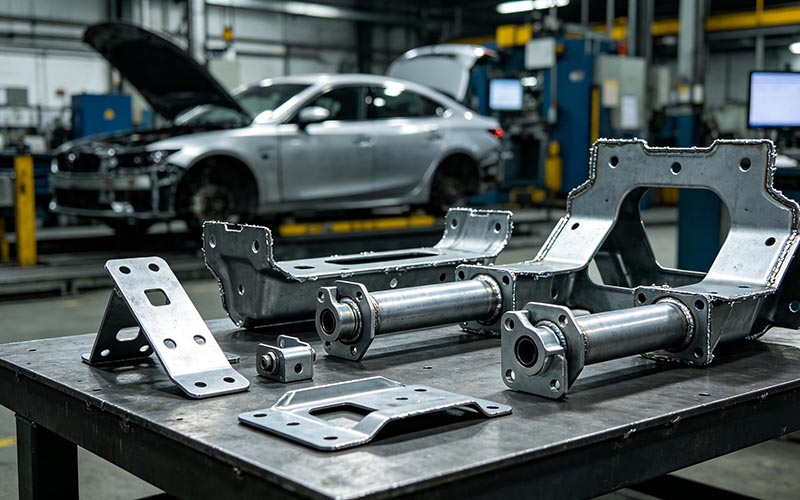
What are shock absorber stamping parts?
Shock absorber stamping parts are metal components formed by sheet metal stamping processes, including spring seats, brackets, and valve shims.
What is the function of stamping parts in shock absorbers?
They provide: Structural support, Component positioning, Fluid control (valving shims)
What materials are used for shock absorber stamping parts?
High-strength steel, Spring steel, Stainless steel, Aluminum alloy
Why do stamping parts require high-strength materials?
Because the stamping parts are subject to vibration loads for a long time: to prevent deformation and improve fatigue life.
What is the manufacturing process of shock absorber stamping parts?
Typical process: 1. Raw material procurement (Coil/sheet material) 2. Uncoiling/shearing (Cutting & blanking) 3. Stamping forming 4. Punching/drawing 5. Deburring 6. Surface treatment 7. Inspection (The stamping process includes procedures such as stretching, bending and punching.)
What is cold stamping process?
Cold stamping is forming metal sheets at room temperature using dies.
What is the role of stamping dies?
The die determines shape, accuracy, and production efficiency.
Why is stamping suitable for mass production?
Stamping enables high-volume, low-cost production with consistent quality.
What are common stamping parts in shock absorbers?
Spring seat, Bracket, Valve shim, Washer and other structure parts
What is the function of valve shims?
They regulate oil flow and damping performance.
What are the working conditions of stamping parts?
They operate under vibration, load, oil, and temperature variations.
Why is fatigue resistance important?
Due to long-term exposure to cyclic loads, fatigue failure is prone to occur.
What surface treatments are used for stamping parts?
Zinc plating, Nickel plating, Powder coating, Black oxide
Why is surface treatment required for stamping parts?
Anti-corrosion, enhanced wear resistance, improved appearance
How to ensure quality of stamping parts?
High precision tooling, dimensions and appearance inspection are critical.
What are common failures of stamping parts?
Fatigue fracture, deformation, corrosion
Why do stamping parts crack?
Material issues, unreasonable mold design, excessive forming stress
How are stamping parts used in assembly?
As a component for fixing the structure, as a control component for damping the function piece
How to choose a stamping parts supplier?
Key points: Mold capability, batch production capability, quality control
Do you support OEM stamping parts?
Support: Mold development, product design, mass production
Why use stamping instead of machining in shock absorbers?
Lower cost, suitable for large-scale production, and better consistency
What is the future of automotive stamping parts?
High-strength steel (AHSS), lightweighting, integrated structure
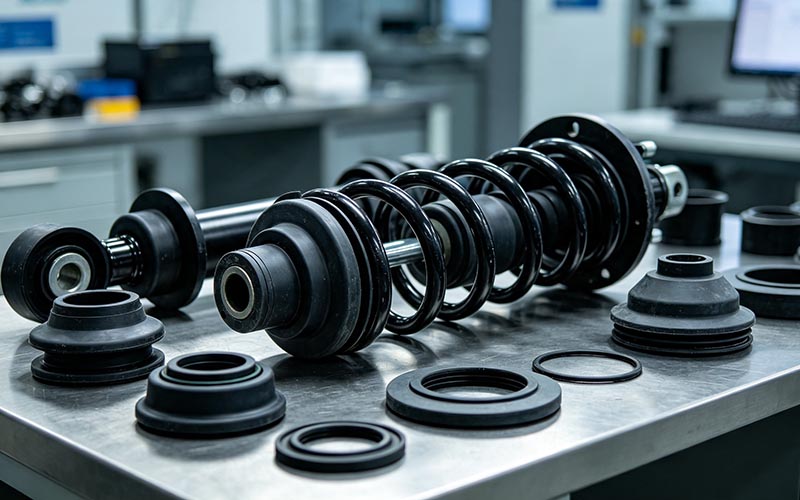
What are rubber parts in shock absorbers?
Rubber parts in shock absorbers are components used to absorb vibration, reduce noise, and provide flexible connections, including bushings, mounts, and rubber pads.
What is the function of rubber parts in suspension systems?
Vibration absorption, Noise reduction / NVH, Shock buffering, They help reduce NVH (Noise, Vibration, Harshness).
What are common rubber parts in shock absorbers?
Rubber bushing, Strut mount, Dust boot, Bump stop
What is a rubber bushing?
A rubber bushing is a rubber-metal bonded component used for vibration isolation and flexible connection.
What is a strut mount?
A strut mount supports the shock absorber and isolates vibration from the vehicle body.
What materials are used for rubber suspension parts?
NR, SBR, NBR, EPDM or others
Why use different rubber materials?
Different materials are suitable for different environments: EPDM: resistant to aging, NBR: resistant to oil, NR: high elasticity.
What is the manufacturing process of rubber bushings?
Rubber compounding → Metal surface treatment → Bonding agent coating → Vulcanization molding → Finishing → Inspection
What is rubber vulcanization?
Vulcanization cross-links rubber to improve strength and durability.
How is rubber bonded to metal?
Rubber is chemically bonded to metal during vulcanization.
What are the working conditions of rubber parts?
High and low temperature environment, Oil contamination, High-frequency vibration, Impact load
What are key performance properties of rubber parts?
Elasticity, Fatigue resistance, Aging resistance, Oil resistance
How to test rubber part quality?
Hardness, Tensile strength, Bonding strength, Fatigue test
Why do rubber bushings fail?
Aging and cracking, overload, oil corrosion
What are symptoms of strut mount failure?
Unusual noises, steering wheel vibration, unstable driving
What causes rubber aging?
High temperature, ultraviolet rays, oxidation
How are rubber parts assembled in shock absorber?
Installed via press-fit or bolted connections.
Can rubber parts be customized?
Yes, provide requirements such as material formula, dimensions, hardness, etc.
How to choose a rubber bushing?
The following factors need to be considered: load, working environment, and service life requirements.
Why are rubber bushings essential in suspension systems?
Because rubber can: absorb vibrations, reduce noise and enhance comfort.
Can rubber replace metal parts?
Yes, especially for vibration isolation applications.
What is the future of rubber suspension parts?
High-performance composite materials, longer lifespan, lightweight design
What are shock absorber plastic parts?
Shock absorber plastic parts are injection-molded components such as dust boots, bump stops, spring seats, and spacers used in automotive suspension systems. They provide protection, cushioning, and structural support.
What is the function of a shock absorber dust boot?
A dust boot protects the piston rod and sealing system from dust, water, and debris, preventing premature wear and oil leakage.
Why is the bump stop important?
The bump stop absorbs impact energy when the suspension reaches full compression, preventing metal-to-metal contact and protecting the shock absorber.
What materials are commonly used for plastic shock parts?
Common materials include: PP (Polypropylene) with advantage of cost-effective, PA6/PA66 (Nylon) with advantage of high strength, TPE/TPV with advantage of flexible and durable, PU foam used for bump stops.
What are the key performance requirements for plastic parts used in shock absorbers?
High temperature resistance, Fatigue resistance, Chemical resistance (oil, salt), UV and ozone resistance, Impact absorption
What happens if the dust boot from shock absorber fails?
Failure allows contaminants to enter, causing rod wear, seal failure, and reduced shock absorber lifespan.
What manufacturing process is used for plastic parts from shock absorbers?
Main processes include: Injection molding, Blow molding (for bellows), Foam molding (for bump stops), Trimming & inspection
What are the critical quality control points for plastic parts in shock absorber?
Dimensional accuracy, Material hardness (Shore A/D), Compression set, Fatigue life, Surface defects
How to choose the right plastic material for shock absorbers?
Material selection depends on temperature, load, and environment. For example, PA66 is used for structural strength, while TPE is better for flexibility.
What are common failure modes for plastic parts in shock absorber?
Cracking, Hardening, Deformation, Wear, Detachment
Are plastic parts better than rubber parts in shock absorbers?
Plastic parts offer better dimensional stability and durability, while rubber provides better flexibility. A combination is often used.
What is the service life of plastic suspension parts?
Typically 50,000–100,000 km depending on material quality and operating conditions.
Can plastic parts from shock absorber be customized?
Yes, OEM/ODM customization is available including design, material selection, and tooling.
What are the working conditions of thes plastic parts in shock absorbers?
1. Temperature: -40°C to +120°C, 2. Exposure: dust, mud, water, oil, 3. High-frequency vibration
How do plastic parts improve NVH performance?
Plastic components help reduce noise and vibration by isolating contact surfaces and absorbing energy.
What certifications are required for the plastic parts in shock absorbers?
IATF 16949, ISO 9001, RoHS / REACH compliance
How to ensure long-term durability of plastic parts in shock absorber?
Use high-quality materials, proper design thickness, and validated testing such as fatigue and thermal aging.
What are the advantages of injection molding?
High precision, Mass production capability, Cost efficiency, Complex shapes
What is a shock absorber spring?
A shock absorber spring is a key component in the automotive suspension system. It supports vehicle weight, absorbs road shocks, and maintains stability. Common types include coil springs, compression springs, and suspension springs.
What is the function of suspension springs?
The main functions include shock absorption, load support, ride comfort improvement, and maintaining tire-road contact.
What types of suspension springs are available?
Common types include coil springs, leaf springs, torsion bars, and air springs.
What materials are used for suspension springs?
Common materials include high-strength spring steel such as 60Si2Mn, SUP9, SAE9254, and other alloy steels.
What is the manufacturing process of suspension springs?
The process includes material sourcing, coiling, heat treatment, shot peening, surface coating, and quality inspection.
What is shot peening of shock absorber spring and why is it important?
Shot peening improves fatigue strength by creating compressive stress on the surface.
What are the key performance parameters of shock absorber spring?
Key parameters include spring rate, fatigue life, load capacity, free height, and corrosion resistance.
What is spring rate?
Spring rate is the force required per unit of deflection, determining suspension stiffness.
How to improve spring fatigue life?
Use high-quality materials, shot peening, proper heat treatment, and corrosion-resistant coatings.
What are common failure modes of suspension springs?
Common failures include fatigue fracture, corrosion, and permanent deformation.
What surface treatments are used for shock absorber spring?
Common treatments include powder coating, e-coating, and phosphating.
What vehicles use suspension springs?
Used in passenger cars, trucks, off-road vehicles, and heavy machinery.
How do springs affect ride comfort?
Softer springs improve comfort, while stiffer springs enhance handling and stability.
Can suspension springs be customized?
Yes, customization is available for dimensions, spring rate, and materials.
How to choose the right suspension spring?
Consider vehicle type, load requirements, and operating conditions.
How do springs and shock absorbers work together?
Springs absorb impact, while shock absorbers control oscillation.
What are the working conditions?
Operating conditions include temperature variation, corrosion, and vibration.
Do suspension springs need replacement?
They usually last long but should be replaced if damaged or deformed.
Do springs comply with international standards?
Common standards include ISO, SAE, and DIN.
Why choose a professional spring manufacturer?
Professional manufacturers ensure quality, reliability, and customization capability.
What is a shock absorber bushing?
A shock absorber bushing is a low-friction sliding or vibration-isolating component used to connect the shock absorber to the vehicle structure or piston rod. It reduces friction, absorbs vibration, and ensures precise motion.
What is the function of a shock absorber bushing?
Shock absorber bushings: 1.Reduce friction 2.Absorb vibration 3. Improve NVH (Noise, Vibration, Harshness) 4. Ensure smooth reciprocating motion
What types of shock absorber bushings are there?
Types include: 1.PTFE composite bushings 2.Sintered oil-impregnated bushings 3.Rubber-metal bonded bushings 4.Spherical plain bearings
What materials are used for shock absorber bushings?
Common materials include: 1.PTFE (Polytetrafluoroethylene) 2.Bronze 3.Steel backing 4.Rubber (NR, NBR, EPDM)
What are the advantages of sintered bushings?
Sintered bushings offer: 1.Self-lubrication 2.Lower cost 3.Stable mass production quality 4.Suitable for medium loads
Why is PTFE used in shock absorber bushings?
PTFE provides: 1.Ultra-low friction 2.Excellent wear resistance 3.Maintenance-free operation
What is the manufacturing process of bushings?
Typical process: 1.Raw material inspection 2.Mixing / powder blending 3.Press forming 4.Sintering 5.Sizing / machining 6.Surface treatment
What are the working conditions of shock absorber bushings?
Working conditions include: 1.Wide temperature range 2.Reciprocating motion 3.Oil exposure 4.Dust and impact
How do bushings reduce NVH?
They absorb vibration energy through elastic deformation and low-friction sliding.
Where are bushings used in shock absorbers?
Locations include: Rod guide area, Mounting points, Valve system interfaces
What tests are required for bushings?
Tests include: 1.Friction coefficient 2.Wear resistance 3.Hardness 4.Compression set 5.Dimensional inspection
How to evaluate bushing quality?
Quality is judged by: 1.Surface finish 2.Dimensional accuracy 3.Stable friction 4.Service life
Why do bushings fail?
Failure causes: 1.Wear 2.Material aging 3.Poor lubrication 4.Misalignment
What are symptoms of worn bushings?
Symptoms include: 1.Noise 2.Increased vibration 3.Poor handling
How do OEMs choose bushing suppliers?
OEMs look for: 1.IATF16949 certification 2.Material traceability 3.Stable production 4.Cost efficiency
Do you support custom bushings?
Yes, customization includes: 1.Dimensions 2.Materials 3.Coatings 4.Structural design