When it comes to vehicle performance, metal components provide structural strength, but automotive rubber parts play a key role in controlling vibration, reducing noise,
and improving driving comfort. Rubber components such as bushings, dust boots, and bump stops
act as the first barrier against high-frequency road vibrations, preventing harsh impacts from
being transferred directly to the vehicle chassis and passenger cabin.
With the increasing demand for quieter and more comfortable vehicles, manufacturers are focusing
on advanced rubber material technology and precision engineering to develop reliable rubber vibration isolators that can maintain performance under various driving conditions.
The Role of Rubber Components in Vehicle Vibration Control
Unlike rigid metal parts, rubber has excellent elastic properties that allow it to absorb and
dissipate mechanical energy. Through a process known as elastic hysteresis, rubber converts
vibration energy into a small amount of heat, reducing shock transmission and minimizing unwanted noise.
This unique characteristic makes rubber bushings widely used in suspension systems,
control arms, stabilizer bars, and other automotive applications. By isolating road impacts,
high-quality rubber components help vehicles achieve a smoother and more comfortable driving experience.
How Rubber Compound Formulation Determines Performance
The performance of automotive rubber parts depends heavily on rubber compound formulation.
Engineers adjust the ratio of natural rubber and synthetic polymers, such as Neoprene and EPDM,
to achieve different levels of durability, flexibility, and environmental resistance.
The hardness of rubber materials is commonly measured by Shore A durometer ratings. For many
automotive vibration control applications, rubber hardness typically ranges from 60 to 80 Shore A, depending on the required balance between stiffness and vibration absorption.
Performance Factor
Influencing Element
Typical Requirement
Vibration Absorption
Elasticity and hysteresis characteristics
High energy dissipation capability
Durability
Rubber compound and aging resistance
Long service life under repeated loading
Hardness
Shore A rubber formulation
60-80 Shore A for many suspension applications
Environmental Resistance
EPDM, Neoprene and synthetic polymers
Resistance to heat, ozone, oil, and weather conditions
Engineering Challenges in Designing High-Performance Rubber Parts
Designing reliable rubber vibration isolators requires engineers to overcome the
so-called "Rubber Triangle" — the complex relationship between heat generation, fatigue life,
and dynamic stiffness.
Increasing stiffness may improve load-bearing capacity but can reduce vibration isolation performance.
Improving softness can enhance comfort but may shorten service life under heavy loads. Therefore,
manufacturers must carefully optimize rubber formulation and structural design according to specific
vehicle requirements.
Why FEA Simulation Is Important for Rubber Component Design
Modern rubber component manufacturing increasingly relies on Finite Element Analysis (FEA) to
predict deformation behavior and performance before production. FEA simulation helps engineers
analyze stress distribution, compression levels, and dynamic response under real operating conditions.
Through simulation optimization, manufacturers can reduce excessive deformation, prevent
"squirming" problems, and improve the stability of rubber parts during continuous vehicle operation.
Many automotive rubber components combine rubber with metal sleeves or reinforcement layers.
During vulcanization, rubber is chemically bonded with metal inserts to improve structural strength
and maintain dimensional stability.
The bonding quality between rubber and metal is critical. Poor adhesion may cause separation between
materials, resulting in abnormal noise, reduced performance, or even component failure. Advanced
bonding technology ensures that rubber-metal assemblies remain reliable throughout the vehicle's service life.
Applications of Automotive Rubber Parts in Modern Vehicles
High-quality automotive rubber parts are widely used in multiple vehicle systems, including:
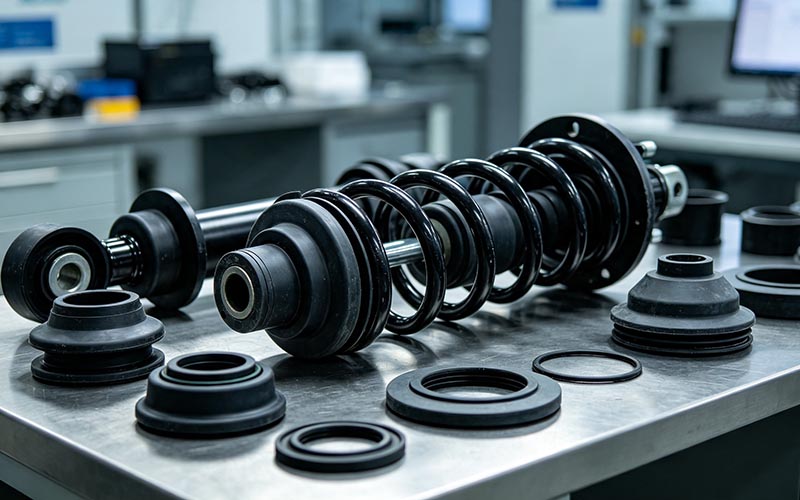
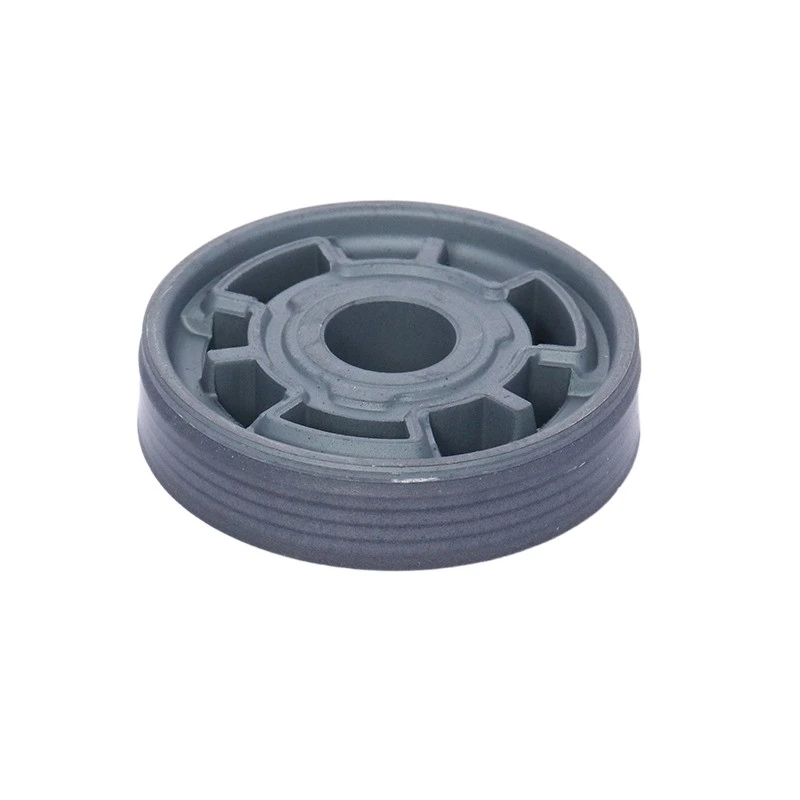
Suspension bushings for vibration isolation
Shock absorber dust boots for protection against contaminants
Bump stops for impact absorption
Engine mounts for noise and vibration control
Chassis rubber components for improved ride comfort
Choosing the Right Rubber Component Supplier
For automotive manufacturers and aftermarket suppliers, selecting a reliable rubber component
manufacturer is essential. Professional suppliers should provide stable material formulation,
precise molding technology, strict quality control, and customized engineering support.
Well-designed rubber components not only reduce vehicle noise and vibration but also improve
overall driving comfort, durability, and customer satisfaction. As automotive technology continues
to develop, advanced rubber solutions will remain an important part of vehicle performance optimization.
We use cookies to offer you a better browsing experience, analyze site traffic and personalize content. By using this site, you agree to our use of cookies. Privacy Policy