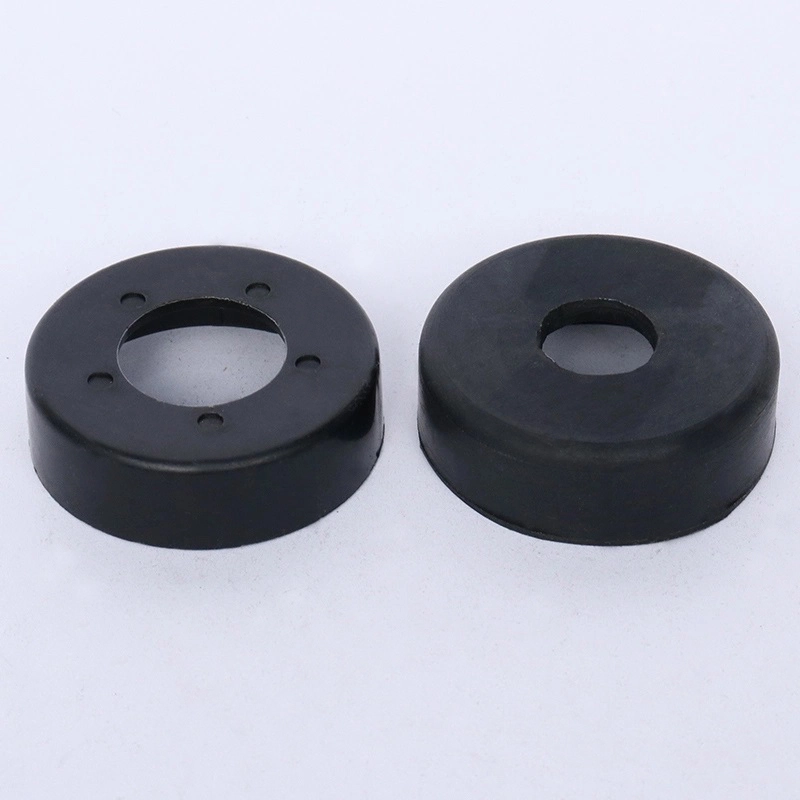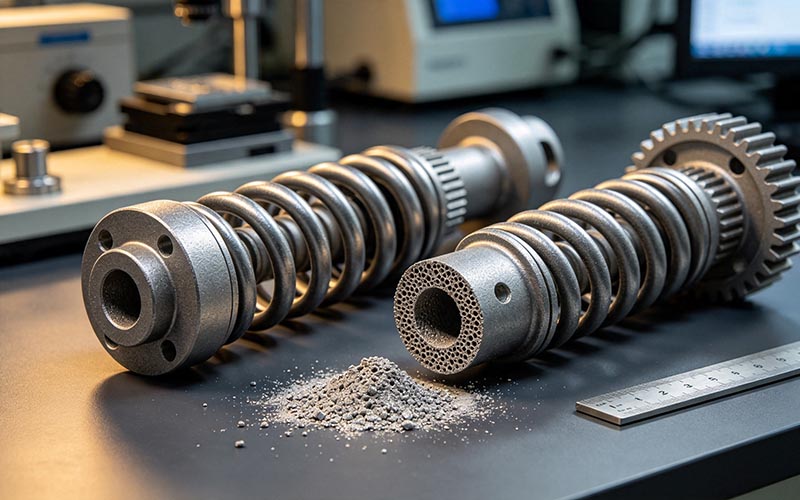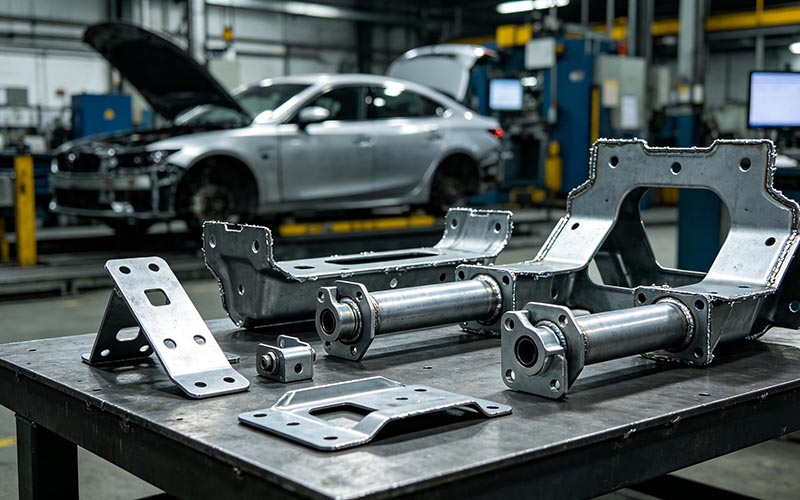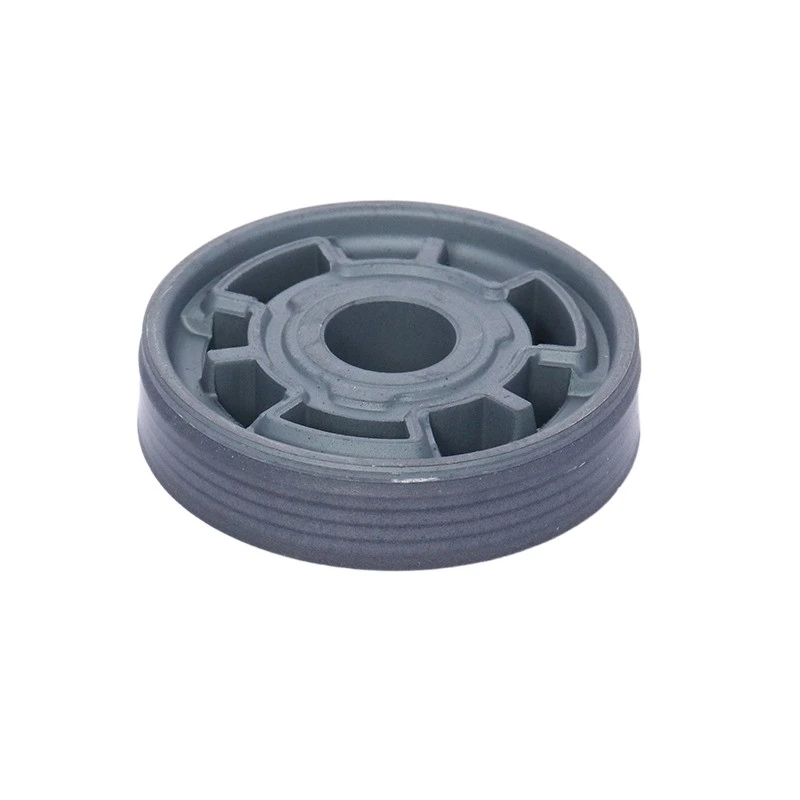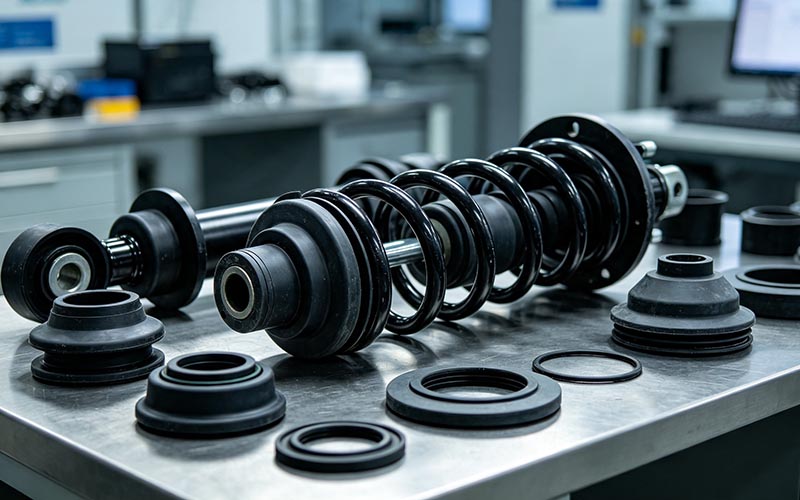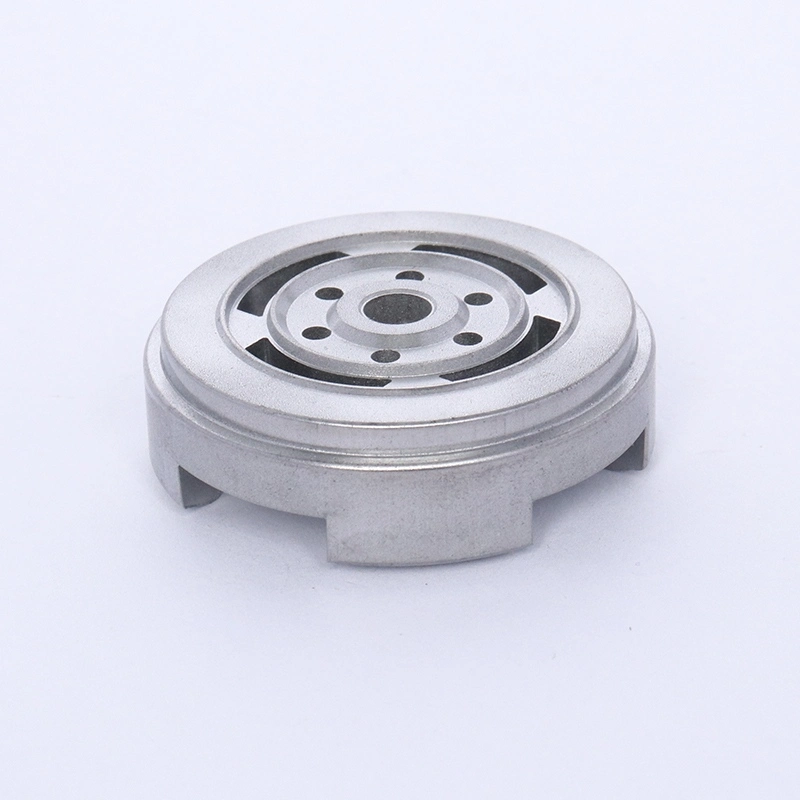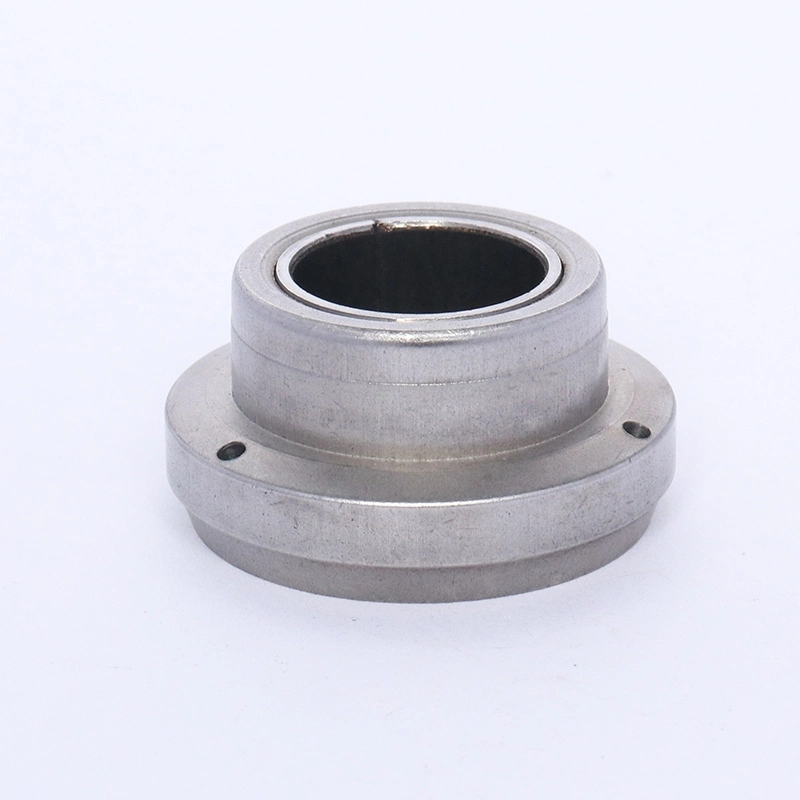
A shock absorber rod guide is a precision component that supports the piston rod, maintains its alignment, and works with the sealing system to help control fluid leakage and unwanted friction. Although relatively small, it has a significant influence on damper durability, operating consistency, and overall suspension reliability. Understanding its function, material options, manufacturing requirements, and inspection criteria helps engineers and purchasing teams make better component decisions.
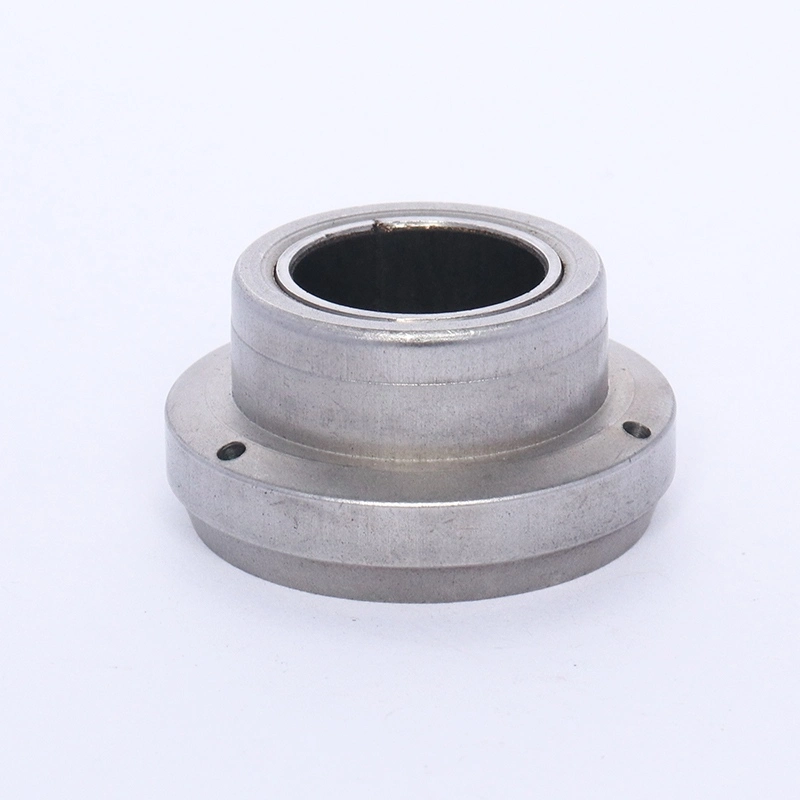
1. What Is a Shock Absorber Rod Guide?
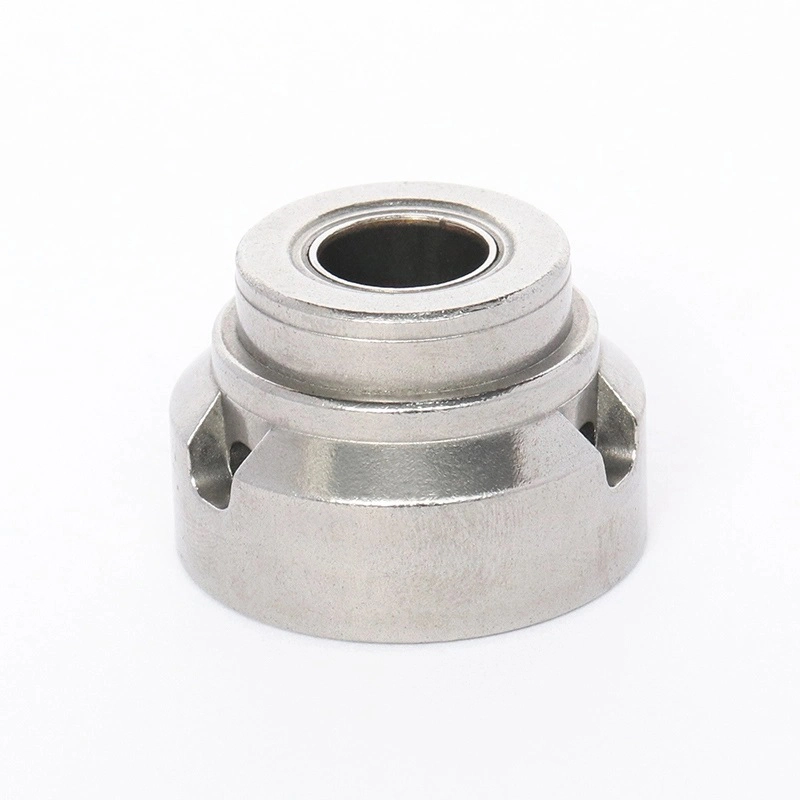
A shock absorber rod guide, also called a piston rod guide, is an internal component installed near the upper end of a hydraulic shock absorber. It provides a guiding surface for the piston rod as the rod moves in and out of the damper body during suspension compression and rebound.
In a typical hydraulic damper, the piston rod connects the piston to the suspension structure outside the cylinder. The rod guide helps keep this moving rod centered, supports loads acting across the rod, and provides locating features for associated sealing or bearing elements. Depending on the design, the guide may also incorporate grooves, seats, or interfaces for seals, bushings, and other components.
Its dimensions and geometry must be compatible with the piston rod, cylinder, seal assembly, and intended operating conditions. Even a component that appears simple can require careful engineering because its bore, concentricity, surface finish, and material characteristics influence the performance of the complete damper.
Where Is It Located?
The rod guide is normally positioned at the rod exit end of the shock absorber cylinder. It surrounds the piston rod and works alongside the rod seal and, in some designs, a bearing or wear insert. Exact configurations differ between twin-tube and monotube dampers, as well as between vehicle platforms and manufacturer designs.
2. How Does a Rod Guide Work?
When a vehicle travels over a bump, the suspension moves and the shock absorber piston rod reciprocates inside the damper. Hydraulic fluid passes through the piston and valve system to generate damping resistance. Throughout this movement, the rod guide helps maintain the rod's intended path.
The rod guide does not independently generate the shock absorber's damping force. Instead, it helps the piston rod and sealing system operate under the alignment and support conditions required by the damper design.
The Working Process
- Rod guidance: The guide supports the piston rod and limits excessive radial movement within the designed clearance.
- Load support: It helps accommodate side loads transmitted through the rod, subject to the design's load limits.
- Seal coordination: Its sealing interfaces or locating features help the rod seal maintain contact with the moving rod.
- Controlled movement: Suitable geometry, material pairing, and lubrication conditions help reduce undesirable friction and wear.
- Long-term operation: Stable guidance helps protect the rod surface and sealing components during repeated compression and rebound cycles.
Because these functions are interdependent, the rod guide should be evaluated as part of the complete shock absorber assembly rather than as an isolated metal component.
3. Key Functions and Performance Benefits
3.1 Maintaining Piston Rod Alignment
Correct alignment helps the piston rod travel smoothly along its intended axis. Excessive clearance, poor concentricity, or an unsuitable bearing interface may allow unwanted movement, potentially increasing uneven contact with adjacent components.
3.2 Supporting the Sealing System
The rod guide often provides structural support and accurately positioned features for the rod seal. Although the seal is primarily responsible for controlling hydraulic fluid leakage, guide geometry and rod alignment influence how consistently the sealing system operates.
3.3 Managing Friction and Wear
Friction depends on several factors, including the piston rod's surface finish, material pairing, lubrication, contact pressure, and operating temperature. A properly engineered guide helps maintain suitable contact conditions and reduce premature wear.
3.4 Improving Component Durability
A guide with appropriate strength, dimensional stability, and wear resistance can help protect the rod, seal, and associated components. The actual service life still depends on the complete damper design, assembly quality, road conditions, fluid condition, and maintenance history.
3.5 Supporting Consistent Production
For shock absorber manufacturers, repeatable rod guide dimensions can simplify assembly, improve fit consistency, and reduce the risk of variation between production batches. This is particularly important for high-volume automotive component programs.
4. Common Materials and Surface Treatments
Material selection influences strength, wear behavior, machinability, corrosion resistance, manufacturing cost, and compatibility with adjacent parts. Powder metallurgy is one established approach for producing complex metal rod guides in repeatable quantities.
| Material or Treatment | Potential Advantages | Key Considerations |
|---|---|---|
| Iron-based sintered metal | Suitable for repeatable production and complex component geometries | Density, porosity, strength, and dimensional requirements must be specified |
| Iron-copper or copper-steel powder metallurgy grades | Can provide a useful balance of mechanical properties and production efficiency | Grade selection should reflect loads, operating conditions, and applicable specifications |
| Machined steel or other solid metals | Allows flexible geometry and material-specific mechanical properties | Material utilization, machining time, and total part cost need evaluation |
| Engineered polymer or composite inserts | May offer low-friction contact and favorable sliding behavior | Temperature, creep, chemical compatibility, and load capacity require validation |
| Steam treatment or other specified surface finishing | May improve surface characteristics or corrosion behavior for compatible materials | Process parameters, coating integrity, and dimensional effects must be controlled |
Why Powder Metallurgy Is Used
Powder metallurgy forms metal powder into a component shape and then bonds the particles through sintering. Depending on the design, subsequent sizing, machining, heat treatment, or surface finishing may be used to achieve the required characteristics.
For rod guides, this process can support efficient production of repeatable geometries and integrated features. However, a sintered component is not automatically suitable for every damper. Density distribution, porosity, mechanical properties, finished dimensions, and the required surface condition must be verified against the application.
Surface treatments should likewise be selected according to the material and performance specification. A treatment suitable for one iron-based grade may not be appropriate for another material or operating environment.
5. How Rod Guides Are Manufactured
The manufacturing route depends on the selected material, geometry, production volume, and customer requirements. For a powder metallurgy rod guide, the process commonly includes the following stages.
- Material preparation: Select and blend metal powders to meet the specified composition and processing requirements.
- Compaction: Press the powder into a defined shape using tooling designed for the component geometry.
- Sintering: Heat the compact under controlled conditions to bond the metal particles.
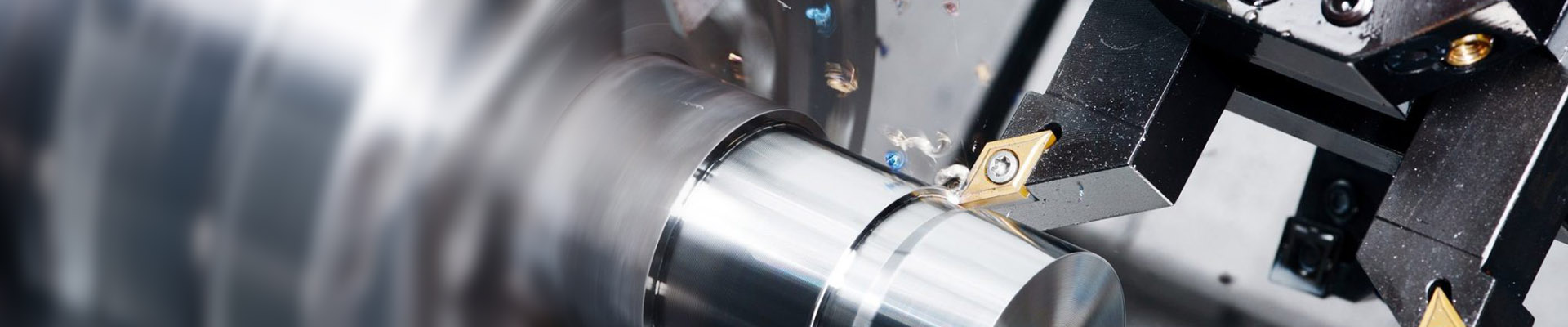
- Sizing or machining: Refine critical dimensions, bore geometry, and fit where required.
- Surface treatment: Apply the specified finishing process when required by the engineering drawing.
- Inspection: Check dimensional characteristics and other defined acceptance criteria.
- Packaging: Protect finished parts from contamination, impact, and corrosion during storage and transport.
Not every component requires every stage. Process selection should follow the approved design and validation plan, and any change to material, tooling, or treatment should be assessed for its effect on the finished part.
Why Process Consistency Matters
Variations in powder characteristics, compaction, sintering conditions, sizing, or finishing may affect the final dimensions and material properties. A controlled production process therefore needs defined operating parameters, inspection methods, and traceability appropriate to the customer's quality requirements.
6. Critical Quality and Inspection Requirements
A rod guide must satisfy both dimensional requirements and functional requirements. The exact inspection plan should be derived from the component drawing, technical agreement, risk assessment, and applicable customer standards.
| Inspection Item | Why It Matters |
|---|---|
| Inner diameter and bore geometry | Influences the fit and guidance of the piston rod or specified insert. |
| Outer diameter and locating features | Supports correct positioning and retention within the damper assembly. |
| Concentricity and perpendicularity | Helps maintain the intended alignment between the rod and surrounding components. |
| Surface finish | Can affect sliding contact, sealing interfaces, and wear behavior. |
| Material composition and density | Helps confirm compliance with the specified material and manufacturing process. |
| Hardness and mechanical properties | Provides evidence that the component meets defined strength or durability requirements. |
| Surface condition and corrosion resistance | Helps identify defects and verify suitability for the intended environment. |
| Visual inspection and traceability | Supports defect detection, batch identification, and investigation of quality issues. |
Measurement equipment should be suitable for the tolerance range, and inspection frequency should reflect the production process and customer control plan. Where required, functional testing and validation within the complete shock absorber should supplement dimensional inspection.
7. Common Problems and Their Causes
Rod guide issues may contribute to damper performance problems, but similar symptoms can also originate from seals, piston rods, valves, mounting hardware, or other suspension components. Diagnosis should consider the complete assembly.
Oil Leakage Around the Piston Rod
Potential causes include a worn or damaged rod seal, contamination, a scratched or corroded piston rod, incorrect assembly, or misalignment affecting the sealing interface. The rod guide may be involved if its wear or geometry compromises rod support.
Abnormal Friction or Uneven Wear
Excessive friction can result from incorrect clearance, surface damage, unsuitable material pairing, insufficient lubrication, or deformation under load. Inspect the rod, guide bore, and bearing surfaces together before identifying the root cause.
Noise or Irregular Rod Movement
Unusual noise or movement can have multiple origins, including loose mounting hardware, damaged suspension parts, internal damper wear, or excessive play. A worn rod guide is one possible contributor, not a definitive diagnosis.
Premature Component Failure
Repeated failures may indicate a mismatch between the selected component and actual operating conditions, an uncontrolled manufacturing variable, contamination, incorrect installation, or an unsuitable tolerance stack-up.
Practical recommendation: Record the failure conditions, inspect associated parts, review dimensional measurements, and compare the findings with the original specification. Replace or redesign components only after the likely cause has been evaluated.
8. How to Select the Right Rod Guide
Choosing a suitable shock absorber rod guide starts with the application requirements rather than price alone. A part that fits loosely or uses an unsuitable material can create additional assembly and durability risks.
Step 1: Confirm the Application
Identify the damper type, intended vehicle or equipment platform, operating environment, and expected service conditions. Confirm whether the part is intended for an existing design or a new development project.
Step 2: Provide the Technical Drawing
Share the relevant dimensions, tolerances, bore specifications, locating features, seal interfaces, and surface finish requirements. If a drawing is unavailable, a representative sample and supporting measurements may help start a technical review.
Step 3: Define Material Requirements
Specify the material grade or the required mechanical and functional properties. The supplier and engineering team can then evaluate suitable options based on load, wear, temperature, corrosion exposure, and manufacturing feasibility.
Step 4: Agree on Quality Criteria
Define inspection items, sampling frequency, material documentation, traceability, packaging, and any customer-specific validation requirements before production approval.
Step 5: Validate Samples Before Mass Production
Check sample dimensions and assembly compatibility, then conduct appropriate functional or durability testing. Approve production only when the agreed acceptance criteria are met.
- ✓ Confirmed component drawing and revision level
- ✓ Agreed material and surface treatment
- ✓ Defined critical dimensions and tolerances
- ✓ Documented inspection and acceptance criteria
- ✓ Sample evaluation and assembly verification completed
- ✓ Packaging, delivery, and traceability requirements confirmed
9. Applications Across Suspension Systems
Shock absorber rod guides are used in hydraulic damping systems where a moving piston rod needs controlled guidance and a compatible sealing arrangement. Specific designs vary according to the damper architecture, operating loads, and space constraints.
- Passenger cars: Support rod guidance in suspension dampers designed for everyday driving and varying road conditions.
- SUVs and light commercial vehicles: Must be matched to the load, travel, and durability requirements of the relevant suspension system.
- Motorcycles: Require compact designs that suit the dimensions and operating characteristics of the specified damper.
- Commercial vehicles: Need components engineered for their intended loading, duty cycle, and environmental conditions.
- Special-purpose equipment: May require customized dimensions or materials for nonstandard damping assemblies.
These categories describe potential application areas, not universal compatibility. A rod guide should not be assumed to fit every vehicle or shock absorber merely because the general application is similar.
10. What Buyers Should Evaluate When Sourcing
For OEMs, aftermarket suppliers, and component distributors, purchasing a rod guide involves more than comparing unit prices. The supplier must be able to interpret the technical requirements, manufacture consistent parts, and provide a practical process for resolving quality issues.
Manufacturing Capability
Evaluate whether the supplier's production methods are suitable for the component's geometry, material, required tolerances, and annual volume. Ask how critical features are controlled and how process changes are managed.
Quality Documentation
Confirm the availability of agreed inspection reports, material information, batch identification, and validation records. Where automotive customer requirements apply, clarify the specific quality-system or approval requirements rather than assuming that every supplier follows the same standards.
Customization and Engineering Communication
For nonstandard components, effective communication about drawings, tolerances, sample approval, and design changes can prevent costly production delays. Confirm who is responsible for reviewing technical feasibility and approving revisions.
Total Cost and Supply Reliability
Compare tooling expenses, production yield, inspection requirements, packaging, lead time, minimum order quantities, and logistics. A competitive quotation is most useful when the supplier's technical scope and acceptance criteria are clearly aligned with the buyer's requirements.
For companies developing or sourcing powder metallurgy shock absorber components, Ningbo XiaYi Electromechanical Tech Co., Ltd. can be included in the supplier evaluation process. Buyers should communicate their application details and drawings to determine whether the available manufacturing capabilities and product specifications match the intended project.
11. Frequently Asked Questions
1. What is the main purpose of a shock absorber rod guide?
Its primary purpose is to guide and support the piston rod as it moves through the damper. It also helps maintain alignment and supports the correct operation of the associated sealing and bearing components.
2. Does a rod guide prevent all shock absorber oil leakage?
No. The rod seal is the main component responsible for controlling fluid leakage at the moving rod interface. The rod guide contributes by maintaining appropriate support and alignment, but leakage can also result from seal damage, rod surface defects, contamination, or assembly problems.
3. Which material is best for a shock absorber rod guide?
There is no single best material for every application. Iron-based sintered metals, other metals, and engineered polymer or composite elements may be suitable depending on loads, friction, temperature, geometry, production volume, and the requirements of the complete damper.
4. Why is dimensional accuracy important?
Critical dimensions influence rod clearance, alignment, assembly fit, and sealing-system performance. Excessive variation can contribute to unwanted movement, uneven wear, or assembly difficulties.
5. Can a rod guide be customized according to a drawing?
Customization may be possible when the supplier has suitable tooling and manufacturing capabilities. Provide the drawing, material requirements, tolerance specifications, estimated order volume, and application details for a feasibility review.
6. How can buyers evaluate rod guide quality?
Review dimensional inspection results, material compliance, surface condition, traceability, and the supplier's process controls. Where necessary, confirm assembly compatibility and performance through sample testing under the intended operating conditions.
7. Is powder metallurgy suitable for high-volume rod guide production?
It can be suitable for high-volume production because it can produce repeatable shapes with efficient material utilization. Suitability depends on the geometry, required properties, dimensional tolerances, tooling economics, and validation results.
8. What information should be included in a rod guide inquiry?
Include the technical drawing or sample details, material grade, required surface treatment, critical tolerances, annual demand, quality documentation requirements, and target delivery schedule. This information helps the supplier assess feasibility and prepare a more accurate quotation.
Conclusion
A shock absorber rod guide is a small but important part of a hydraulic damper. By supporting piston rod alignment and coordinating with the bearing and sealing systems, it helps maintain controlled movement, manage wear, and support reliable operation. Its performance depends on the interaction of material selection, dimensional precision, manufacturing consistency, surface condition, and correct assembly.
For engineers and purchasing professionals, the most effective sourcing strategy is to define the application clearly, confirm critical specifications, evaluate manufacturing and quality controls, and validate samples before moving to mass production. This approach helps reduce compatibility risks and supports more consistent suspension component quality.
Looking for a Shock Absorber Rod Guide Supplier?
Ningbo XiaYi Electromechanical Tech Co., Ltd. welcomes inquiries from automotive component manufacturers, engineering teams, and purchasing professionals seeking shock absorber components for specific applications.
Share your drawings, material specifications, dimensional requirements, and estimated order quantities so your project can be evaluated against the relevant manufacturing and quality requirements.
For product information, customization discussions, or a quotation request, contact us to discuss your shock absorber rod guide requirements and identify the next steps for your project.