- Home
- About Us
- Products
- News
- Download
- Send Inquiry
- Contact Us

News
Follow us for the latest updates on production milestones, technology upgrades, and global market expansions.
What Is a Shock Absorber Piston and How Does It Control Damping?
A shock absorber piston is a precision component that regulates hydraulic fluid movement inside a damper and directly influences damping behavior during compression and rebound. Its port geometry, dimensional accuracy, surface condition, material, and interaction with valve discs all affect the consistency and durability of the finished shock absorber. This guide explains how the piston works, what buyers should inspect, why manufacturing tolerances matter, and how to avoid common sourcing and performance problems.
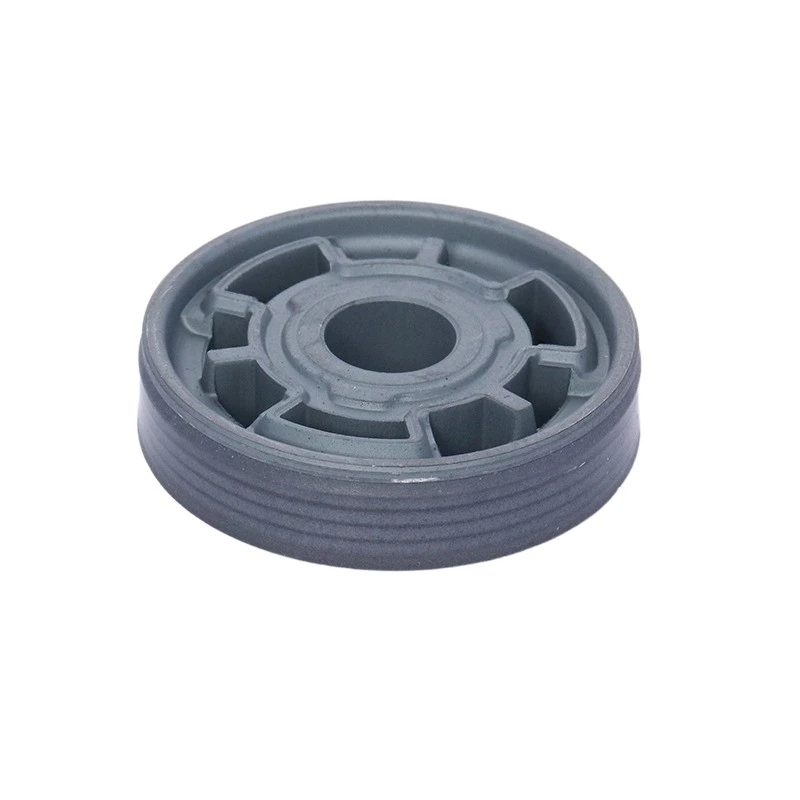
Table of Contents
- What Is a Shock Absorber Piston?
- How Does a Shock Absorber Piston Work?
- What Are the Main Features of Its Structure?
- What Materials Are Commonly Used?
- Why Do Precision and Surface Finish Matter?
- What Problems Can a Poor-Quality Piston Cause?
- What Should Buyers Check Before Ordering?
- What Should a Reliable Manufacturing Process Include?
- Where Are Shock Absorber Pistons Used?
- Frequently Asked Questions
- Find a Suitable Shock Absorber Piston Solution
What Is a Shock Absorber Piston?
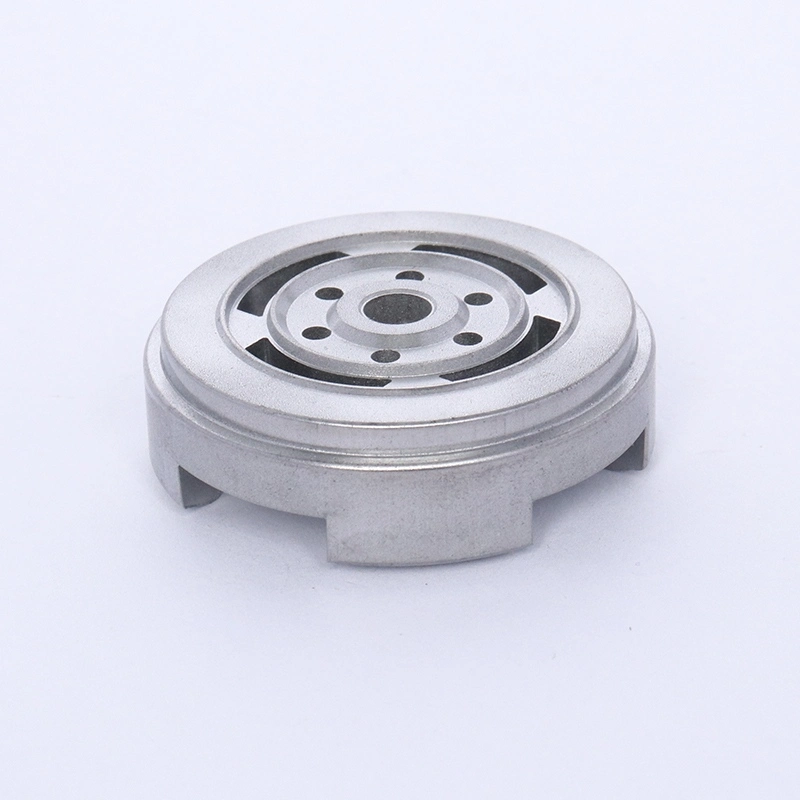
A shock absorber piston is a moving internal component inside a hydraulic damper. It is normally connected to the piston rod and travels through the working cylinder as the suspension compresses and extends. The piston separates fluid chambers and uses controlled flow passages and valve elements to regulate hydraulic fluid movement.
The primary purpose of the piston is to control suspension movement rather than simply stop an impact. A spring stores and releases mechanical energy, while the damper controls the resulting movement. Inside a hydraulic shock absorber, the piston helps regulate fluid flow and creates resistance as hydraulic fluid passes through designed passages. This resistance converts part of the suspension's kinetic energy into heat and helps control unwanted body and wheel movement.
This makes the piston a functional component rather than merely a structural part. Its dimensions, passage arrangement, valve-support surfaces, material, and manufacturing quality can all affect how consistently the complete damper performs.
Key Point: A shock absorber piston is essentially a flow-control component inside the damper. Even relatively small changes in its geometry can influence hydraulic resistance and overall damping behavior.
For manufacturers and buyers, this is why the piston should always be considered together with the cylinder, piston rod, valve discs, seals, hydraulic fluid, and other related components.
How Does a Shock Absorber Piston Work?
During suspension movement, the shock absorber piston travels inside the cylinder while hydraulic fluid must move from one chamber to another. The piston and its associated valve system determine how easily the fluid can pass. This controlled resistance is what gives the damper its ability to manage suspension movement.
Compression Stroke
When the suspension compresses, the piston moves in one direction and displaces hydraulic fluid. Fluid is forced through designed passages and valve arrangements, producing resistance that controls the rate of compression.
Rebound Stroke
When the suspension extends, the piston travels in the opposite direction. Fluid follows another controlled flow path, allowing the damper to regulate how quickly the suspension returns after compression.
The resistance generated during these movements depends on several factors, including piston passage geometry, valve characteristics, fluid viscosity, piston velocity, and the overall construction of the damper. Different shock absorber architectures may use different internal arrangements for managing displaced fluid.
For example, twin-tube and mono-tube shock absorbers have different internal configurations. Their piston designs and valve arrangements therefore cannot always be treated as interchangeable. A piston that matches an outside diameter may still be unsuitable if its internal flow geometry or valve interface differs from the required specification.
This is an important consideration for replacement-part buyers. Matching only the visible shape is not enough. The internal design must also correspond with the intended damper system.
What Are the Main Features of Its Structure?
A shock absorber piston may appear relatively simple from the outside, but it performs a highly controlled hydraulic function. Depending on the design, several areas of the piston can be critical to the finished damper.
| Feature | Primary Role | Why It Matters |
|---|---|---|
| Fluid Passages | Guide hydraulic fluid through the piston | Influence flow resistance and damping response |
| Valve Seating Areas | Support valve discs or related components | Influence controlled valve opening and sealing |
| Central Mounting Bore | Connect the piston with the piston rod | Requires accurate alignment and dimensional control |
| Outer Diameter | Work within the cylinder | Influences fit, movement, and internal clearance |
| Valve Support Surfaces | Provide controlled contact with valve elements | Influence repeatability and damping characteristics |
The piston may also work with valve discs, retainers, spacers, springs, seals, and other components. Therefore, the final geometry should be evaluated as part of the complete piston and valve assembly rather than as an isolated metal component.
For custom projects, manufacturers normally need more than the piston diameter. Critical information may include bore dimensions, thickness, passage location, passage diameter, valve-seat geometry, material, tolerances, surface requirements, and the intended shock absorber model.
What Materials Are Commonly Used?
Material selection depends on load, production volume, geometry, required strength, manufacturing process, operating environment, dimensional requirements, and cost targets. Different shock absorber piston designs may require different material solutions.
Sintered Iron
Powder metallurgy can be suitable for complex piston geometries and high-volume production. It can support consistent production of components with multiple functional features while reducing machining requirements for suitable designs.
Aluminum Alloys
Aluminum can be considered when lightweight construction is important. The appropriate alloy and treatment should be selected according to mechanical loading, operating environment, dimensional stability, and the specific application.
Engineered Material Solutions
Specialized applications may require alternative materials, surface treatments, or manufacturing approaches. Selection should be based on actual operating requirements rather than material preference alone.
For purchasing teams, the better approach is to evaluate the complete relationship between material, geometry, production method, tolerance, surface condition, operating temperature, hydraulic fluid compatibility, and expected service requirements.
Material selection should also consider production volume. A solution that works well for a small prototype order may not provide the same economic or production advantages for a large-scale OEM program. Discussing material and manufacturing options with the component supplier at the design stage can help prevent unnecessary redesign later.
Why Do Precision and Surface Finish Matter?
A shock absorber piston operates in a controlled hydraulic environment and moves repeatedly under changing loads. Excessive dimensional variation can affect clearance, alignment, valve seating, fluid flow, and assembly consistency. Surface condition is also important because functional interfaces may experience repeated movement and contact.
Critical dimensions should therefore be clearly identified on the engineering drawing. Not every dimension necessarily has the same importance. A supplier and buyer should distinguish between general dimensions and functional dimensions that directly influence assembly or performance.
A Practical Quality-Control Chain
- Verify incoming raw material and production batch information.
- Control forming, machining, heat-treatment, or finishing parameters.
- Inspect critical dimensions against the approved drawing.
- Check surface condition on important functional areas.
- Verify valve-seat and fluid-passage geometry.
- Perform sampling or functional testing according to the agreed specification.
- Maintain production-batch traceability and inspection records.
For OEM buyers, these controls become especially important when the same piston is produced across multiple batches. A first sample may meet the drawing perfectly, but the long-term value of the supplier depends on whether the same characteristics can be reproduced consistently during mass production.
Clear inspection standards also make communication easier. When both sides agree on measurement methods, tolerance limits, sampling requirements, and acceptance criteria before production, quality disputes are easier to prevent.
What Problems Can a Poor-Quality Piston Cause?
Problems with a shock absorber piston are not always visible during a basic visual inspection. Dimensional or functional problems may only become apparent during assembly, bench testing, vehicle testing, or extended operation.
- Inconsistent damping: Variations in fluid passages or valve seating can change the intended hydraulic flow resistance.
- Assembly difficulty: Dimensional errors may cause poor fit with the piston rod, valve stack, or cylinder.
- Premature wear: Unsuitable surface conditions or material properties can accelerate wear at functional interfaces.
- Fluid-flow variation: Burrs, blocked passages, or incorrect port dimensions can interfere with designed fluid movement.
- Batch-to-batch inconsistency: Weak process control can create differences between production lots.
- Higher total purchasing cost: Sorting, rework, returns, additional inspection, and field problems can cost substantially more than proper quality control.
Buyer Consideration: Do not evaluate a shock absorber piston only by unit price. A lower purchase price can become expensive if the component creates assembly problems, inconsistent performance, additional inspection work, or production delays.
For this reason, supplier evaluation should include production capability, inspection procedures, technical communication, sample approval, traceability, and delivery reliability in addition to quotation price.
What Should Buyers Check Before Ordering?
For OEM manufacturers, aftermarket suppliers, suspension-system companies, and distributors, a clear technical specification is the foundation of a successful purchasing project. Before requesting a quotation, prepare as much of the following information as possible.
| Specification | Information to Provide | Purchasing Benefit |
|---|---|---|
| Drawing | 2D drawing, 3D model, or detailed dimensional specification | Reduces specification misunderstandings |
| Material | Material grade, density, hardness, treatment, or equivalent specification | Helps ensure appropriate mechanical and production characteristics |
| Critical Dimensions | Outer diameter, bore, thickness, port dimensions, and tolerances | Supports accurate assembly and consistent production |
| Surface Requirements | Surface finish, coating, treatment, or other functional requirements | Helps protect functional surfaces and improve consistency |
| Application | Passenger vehicle, motorcycle, commercial vehicle, off-road, or other system | Allows the supplier to understand operating requirements |
| Annual Volume | Estimated demand, batch size, MOQ, and delivery requirements | Helps determine an appropriate production solution |
If a complete engineering drawing is not available, buyers can provide an existing piston sample, photographs, measurements, the shock absorber model, or information about the complete suspension assembly.
A qualified supplier may then determine which additional information is required before creating a quotation or production plan. This approach is especially useful for replacement components where the original engineering documentation is unavailable.
What Should a Reliable Manufacturing Process Include?
Manufacturing consistency is critical because the shock absorber piston must work together with the cylinder, piston rod, valve discs, seals, hydraulic fluid, and other components. A reliable manufacturing process should therefore connect engineering review, production control, inspection, testing, and traceability.
STEP 01
Engineering Review
Confirm drawings, material, tolerances, application, and functional requirements before production begins.
STEP 02
Controlled Production
Maintain stable forming, machining, heat-treatment, finishing, or other relevant production parameters.
STEP 03
Dimensional Inspection
Measure critical dimensions with suitable inspection equipment according to an agreed inspection plan.
STEP 04
Functional Verification
Where required, verify the component or complete assembly against the customer's functional specifications.
STEP 05
Traceability
Maintain production-batch information and inspection records so potential issues can be investigated efficiently.
STEP 06
Protective Packaging
Protect finished components from contamination, impact, moisture, and corrosion during storage and transportation.
For high-volume production programs, process repeatability deserves the same attention as the first prototype. The goal is not simply to manufacture one piston that meets the drawing, but to reproduce the required characteristics consistently across production lots.
Good technical communication is also part of manufacturing quality. If a supplier identifies a potential production issue before mass production, discussing it early can prevent unnecessary tooling changes, production delays, or rejected batches.
Where Are Shock Absorber Pistons Used?
Shock absorber pistons are used in hydraulic damping systems across a wide range of transportation and suspension applications. The exact design varies according to vehicle type, damper architecture, load, operating conditions, and performance requirements.
- Automotive Suspension Systems
- Motorcycle Shock Absorbers
- Commercial Vehicles
- Off-Road Suspension
- Specialized Damping Systems
- Replacement Components
- Aftermarket Suspension Parts
- OEM Shock Absorber Assemblies
Different applications can require different piston dimensions, valve configurations, materials, and manufacturing specifications. Therefore, a standardized piston should not automatically be considered a universal replacement for every shock absorber.
For custom or replacement projects, the safest approach is to identify the complete application and verify compatibility with the existing damper design before placing a production order.
Frequently Asked Questions
What does a shock absorber piston do?
A shock absorber piston moves inside the damper cylinder and regulates hydraulic fluid movement through designed passages and valve systems. The resulting resistance helps control suspension compression and rebound.
Is a shock absorber piston the same as a piston rod?
No. They are separate components that work together. The piston travels inside the cylinder and controls hydraulic fluid flow, while the piston rod connects the piston assembly to the external suspension structure.
Why are piston holes and passages important?
Piston holes and passages provide controlled routes for hydraulic fluid. Their dimensions and locations influence fluid resistance and work together with valve elements to produce the intended damping characteristics.
Can a shock absorber piston be customized?
Yes. Depending on the manufacturer's capabilities, pistons can be developed according to customer drawings, samples, dimensions, material requirements, valve configurations, and application conditions.
What information should I provide when requesting a quotation?
Useful information includes a 2D drawing or 3D model, existing sample, material requirement, critical dimensions, tolerances, surface treatment, application, estimated order quantity, and delivery requirements. If some information is unavailable, provide the complete shock absorber model or existing component for technical evaluation.
How can buyers reduce the risk of receiving inconsistent pistons?
Use a clear technical drawing, identify critical tolerances, approve samples before mass production, establish inspection requirements, and request production-batch traceability. For high-volume orders, consistent process control is particularly important.
What should be considered when selecting a shock absorber piston supplier?
Consider technical capability, material and manufacturing options, dimensional inspection, sample approval procedures, production capacity, quality consistency, communication, traceability, packaging, and delivery capability. The supplier should also be able to understand the application rather than treating the piston as a generic metal part.
Find a Reliable Shock Absorber Piston Solution
Selecting the right shock absorber piston requires more than matching a basic outside diameter. Material, geometry, valve compatibility, dimensional tolerance, surface condition, production consistency, and application requirements all need to work together.
Ningbo XiaYi Electromechanical Tech Co., Ltd. can support buyers looking for shock absorber piston components and customized solutions based on specific application and technical requirements. Whether you are developing a new suspension component, sourcing replacement parts, or planning a larger OEM production program, providing accurate specifications at the beginning can make the purchasing process more efficient.
A drawing, sample, or detailed application specification can provide a strong starting point for technical evaluation. Discussing dimensions, materials, tolerances, production volume, and inspection requirements early can also help ensure that the final component matches the intended application.
Have a drawing, sample, or specific shock absorber piston requirement? Contact us to discuss your application, technical specifications, production requirements, and customized component solution.
Related News
- Multi-Hole Designed Base Valve: Supporting More Consistent Shock Absorber Performance
- How Do Automotive Rubber Parts Improve Vehicle Comfort and Noise Reduction?
- How Does Powder Metallurgy Improve the Performance of Shock Absorber Components?
- How Does Precision Stamping Improve the Quality of Shock Absorber Components?
Leave me a message